Clients spend anywhere from twenty minutes to several hours in your chair, and your team spends the whole day there. Here is how to choose music for each part of a salon or spa, from the styling floor to the treatment room.
Salons and spas sell time and attention. A client might spend twenty minutes on a trim or three hours on color, and most of the visit is spent sitting still, listening. Your stylists and therapists spend even longer in the room, all day, every day. That makes music one of the most important parts of the atmosphere, and one of the easiest to overlook.
The first thing to accept is that a salon and a spa need different sound. A salon is social, conversational and a little energetic. A spa is calm, predictable and quiet. Many businesses are a bit of both, so this guide goes room by room.
The hair salon, room by room
Reception and waiting area
This is the first impression. Choose something welcoming and current at a moderate level: polished pop, soft soul or indie with light vocals. Staff at the desk need to hear clients clearly, especially on the phone.
The styling floor
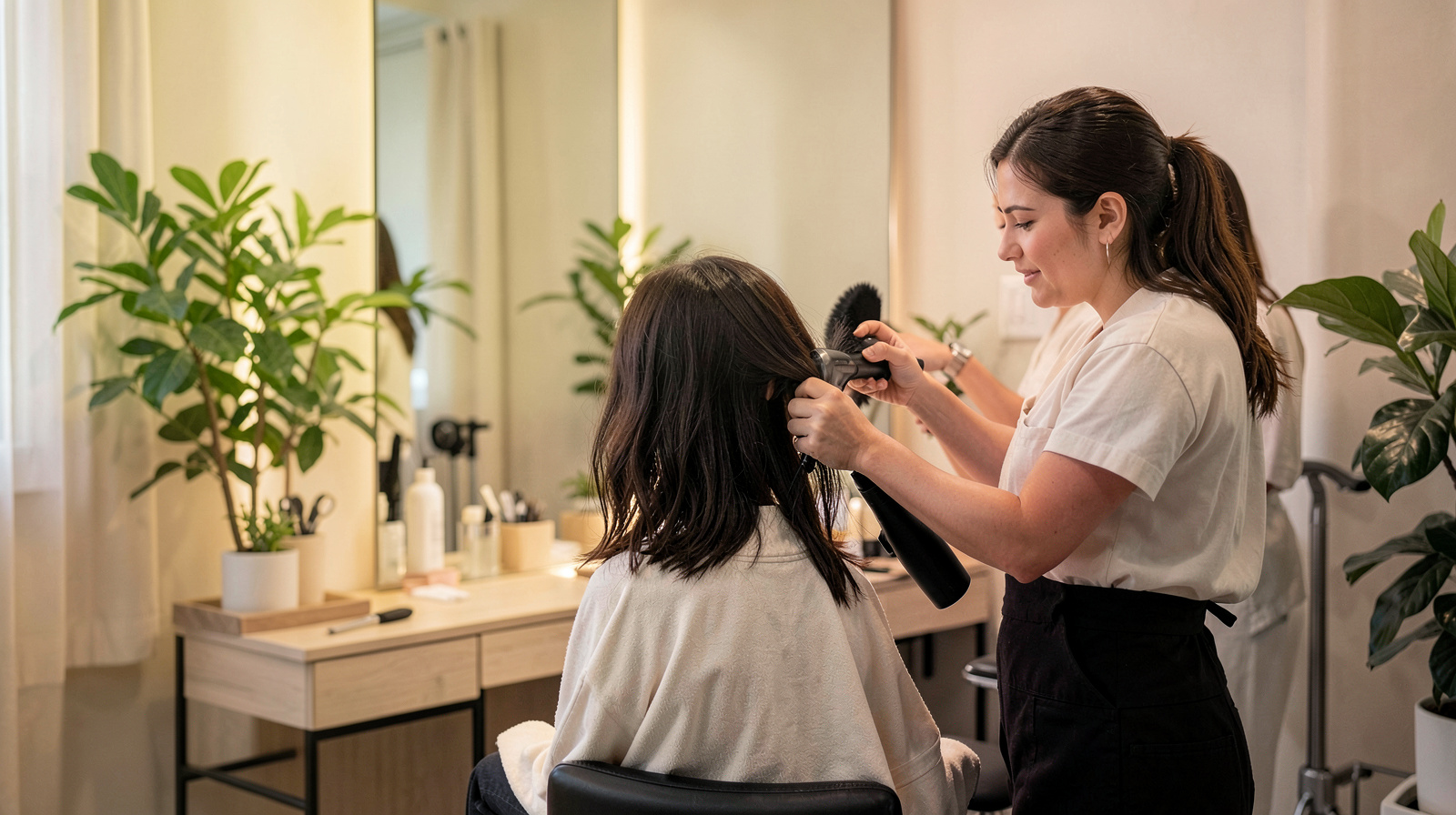
Conversation is the main event here. Clients and stylists talk through most appointments, and hair dryers add bursts of noise. Pick mid-tempo grooves with a steady feel, such as soul, light R&B, indie and lo-fi, and keep vocals low in the mix. Resist the urge to turn the music up every time the dryers start; the music should sit under the conversation, not compete with the equipment.
Shampoo and wash stations
This is where the visit slows down. Shift to calmer, softer tracks, closer to spa music than to the styling floor. A separate speaker or zone makes a noticeable difference if your layout allows it.
Color processing and waiting time
Clients sitting with color or treatments want to relax, read or scroll. Keep this area calm and even, without big changes in energy.
Nail salons and barbershops
Nail salons usually have small rooms and close conversations between technician and client. Keep volume low and the mood mellow. Upbeat tracks work at busy times, but steady, relaxed music suits most of the day.
Barbershops often run on more energy and personality: soul, funk, hip-hop-influenced beats. Check lyrics if you serve families or children, and keep the level low enough for conversation between barber and client, which is a big part of the experience.
The spa and treatment rooms
Spa music has stricter rules, because clients are trying to switch off.
- No lyrics. Words pull attention, and attention is the opposite of relaxation.
- Steady dynamics. Avoid tracks with sudden loud passages, drum hits or dramatic builds.
- Seamless flow. Gaps between tracks break the mood. Continuous, gapless playback helps a lot in treatment rooms.
- Match the session. A 90-minute massage should not include the same track twice. Build sequences longer than your longest treatment.
- Consider nature textures. Water, rain and soft ambient sounds work well for many clients.
Our spa collection, the nature collection and the Prime Spa playlist are good places to start auditioning tracks for treatment rooms. Listen through a sequence before using it in a session, and drop anything that breaks the rules above. For relaxation lounges and retail corners of a spa, the calm mood collection offers a little more movement while staying quiet.
Look after your team
Stylists and therapists hear the playlist for eight or more hours a day. Music that feels fresh to a client can feel repetitive by mid-afternoon to the person working the chair. Three habits help:
- Involve the team. Let staff suggest genres and moods, within the brand's direction.
- Keep a skip list. If a track grates on people, remove it; do not wait for a complaint to turn into a rule-breaking phone plugged into the speaker.
- Rotate regularly. Change the mix every few weeks and when the seasons change.
Volume matters for staff health, too. OSHA's page on occupational noise suggests a simple test: if you need to raise your voice to speak to someone three feet away, noise levels might be over 85 decibels. Salons with several dryers running can get loud, so keep the music well below that level and do not raise it to compete with the dryers.
Licensing for salons and spas
Music played for clients in a salon or spa is a public performance under U.S. copyright law, and personal streaming accounts are not licensed for it. Spotify's support page on public or commercial use names salons specifically among the businesses where Spotify cannot be played publicly, and other consumer services have similar personal-use terms.
Chair-rental and booth-rental salons often ask whether each stylist is responsible for their own music. ASCAP's position is that everyone who participates in or is responsible for a performance is legally responsible, and the business where the music is heard is the one that normally holds the license. The simplest arrangement is one licensed house source for the whole space and a clear rule that personal devices do not go on the house speakers.
WeavyAudio is one way to do that. The catalog is original and owned by WeavyAudio, so there are no PRO royalties for the music you play from it, playback is gapless and continuous, and your subscription includes a license for your location, backed by a signed PDF certificate.
A 30-minute setup checklist
- Map your zones: reception, styling floor, wash stations, treatment rooms and any retail shelf.
- Give each zone a direction in a few words, such as "warm and current" for the floor or "still and wordless" for treatment rooms.
- Set the volume for each zone when the room is busy, not empty, and write the settings down.
- Plan the day: a slightly brighter mix in the morning, steadier through midday, calmer in the last hour.
- Agree who can change the music and how staff flag tracks for the skip list.
- Keep your license paperwork where the manager on duty can find it.
Three sample setups
A busy urban salon
Reception: polished pop and soft soul. Styling floor: lo-fi, indie and light R&B at a moderate level. Wash stations: calm, spa-style tracks on a separate zone if possible. Late afternoon: a touch more energy to carry the team through the last appointments.
A boutique day spa
Treatment rooms: long, lyric-free sequences from the spa and nature collections, identical volume in every room. Relaxation lounge: calm mood tracks at a slightly higher but still soft level. Reception: gentle piano or ambient music that sets expectations the moment the door opens.
A neighborhood barbershop
Soul, funk and clean hip-hop-influenced beats at a level that leaves room for conversation, with a mellower mix in the first and last hours of the day.
If you want one licensed source that covers every room, you can try WeavyAudio free and hear it in your space before your next busy Saturday.
FAQ
What music should I play in my hair salon?
Mid-tempo, conversation-friendly music that fits your brand: soul, light R&B, indie and lo-fi on the styling floor, calmer tracks at the wash stations, and something welcoming at reception.
What is the best music for spa treatments?
Lyric-free, steady music with no sudden changes, such as ambient, soft piano and nature textures, played gaplessly in sequences longer than your longest treatment.
Can stylists play their own playlists?
Not from personal streaming accounts, which are licensed for personal use only. A single licensed house source avoids both the licensing problem and the clash of five different playlists.
Do salons need a music license?
Yes. Music played for clients is a public performance. You need licenses covering the music you play, or a music source whose license covers playback in your business.
How loud should salon music be?
Low enough that a stylist and client can talk at normal voice without leaning in. The dryers will be loud enough on their own.