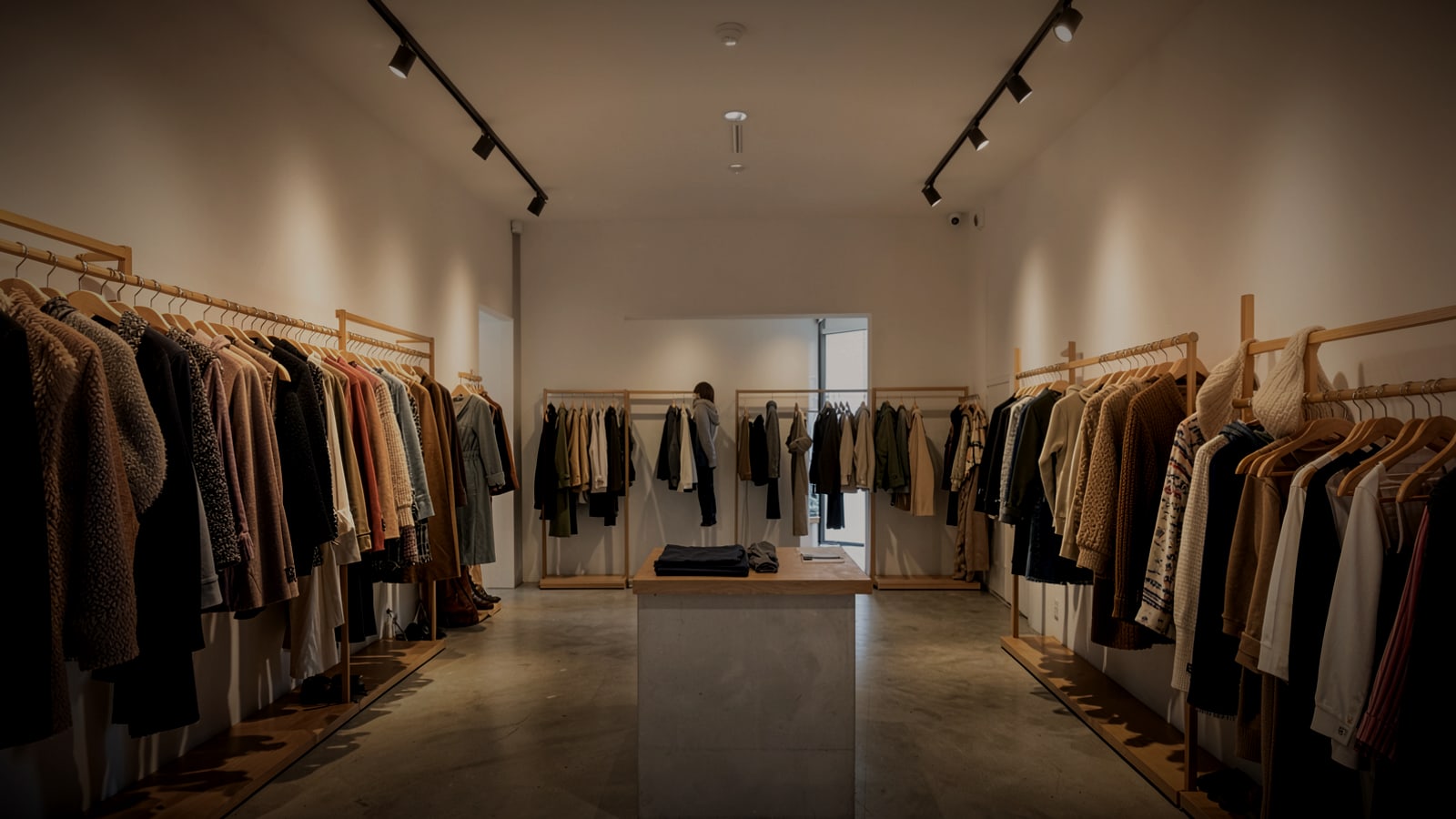
In fashion retail, music is part of the merchandising. It tells shoppers who the store is for before they touch a single rail. Here is how to choose boutique music by customer and price point, set volume zone by zone, handle fitting rooms and plan a trading day, plus the licensing basics.
A shopper decides whether a clothing store is for them within seconds of walking in, and much of that judgment is made by ear. Loud club music says young and fast fashion. Quiet acoustic tracks say considered, slower, maybe more expensive. Silence can say empty. That is why music for clothing stores is not a background detail but part of the merchandising, as important as lighting and window displays.
This guide explains how to choose boutique music that fits your customer, how loud it should be in each part of the store, what to do about fitting rooms and busy weekends, and how to make sure you are licensed.
What research says about fashion store music
Most of the classic retail music studies were run in supermarkets and wine shops. Our overview of background music for retail stores covers them. One study was run specifically in fashion retail, and it is worth knowing.
Morrison, Gan, Dubelaar and Oppewal tested music volume (high or low) and a vanilla scent (present or absent) on young fashion shoppers in a real store (Journal of Business Research, 2011). Music volume and aroma both had a significant effect on shoppers' emotions and satisfaction. The arousal they produced increased pleasure, which in turn was linked to more time and money spent, more willingness to explore the store and higher satisfaction.
Two cautions. The shoppers were young and the store targeted them, so the result says that music should fit the audience, not that every boutique should turn the volume up. And it is a single field study. The practical lesson is that sound is a lever you should set deliberately for your customer, not leave on whatever was playing yesterday.
Start with your customer, not your taste
The owner's favorite playlist is the most common source of mismatched fashion store music. Start instead with three questions:
- Who is your core customer? Age, style and how they shop: quick trip, weekend browse or appointment.
- What is your price point? Higher prices usually suit more space, slower tempos and fewer vocals.
- What do you want them to do? Browse slowly, try things on, return often, feel part of a scene.
Then map the answer to a direction:
- Premium and designer boutiques: calm electronic, soft jazz, acoustic and ambient textures, mostly instrumental, slower to mid tempo. The music should make the space feel unhurried.
- Contemporary and mid-market fashion: indie, soul, chilled pop and light house, with vocals, steady mid tempo.
- Streetwear and young fashion: hip-hop instrumentals and clean hip-hop, house, current pop styles, higher energy. Watch lyrics closely.
- Vintage and secondhand stores: soul, funk, disco-influenced grooves and retro styles fit the stock, as long as they stay background rather than a party.
- Bridal, formalwear and tailoring: calm, warm and elegant; many customers are making a big decision and need space to talk.
- Children's clothing: bright, friendly and gentle, but not nursery rhymes on repeat for the staff.
Set volume zone by zone
Most boutiques are small, which makes volume even more noticeable. Use the conversation test: a customer and a staff member should be able to talk at a normal voice anywhere in the store. Then adjust by zone.
- Entrance and window: slightly livelier, because this is where music sets expectations and pulls people in.
- Main floor: steady and even, with no speaker blasting a single rail.
- Fitting rooms: lower and calmer. This is where customers make decisions, ask friends for opinions and look at themselves under bright light. Music that is too loud or too energetic adds pressure.
- Checkout: lower again, so staff can hear customers, handle returns and take phone calls.
If your store has a single speaker behind the counter, that is almost certainly your volume problem. Two or three smaller speakers spread along the floor give an even level at a lower setting.
A trading day for a clothing store playlist
- Opening to late morning: calmer, mid-tempo music. Early shoppers are often browsing alone and staff are still merchandising.
- Lunchtime: a little more energy for shoppers with limited time.
- Afternoon: steady mid tempo for the main browsing hours.
- Late afternoon and early evening: lift the energy slightly as the store gets busier.
- Last hour: ease back so the store feels relaxed, not like it is chasing people out.
- Weekends and sale days: more energy and more variety, because the store is fuller and louder. Raise the volume only as much as the crowd requires.
Refresh the rotation often. Staff hear the music for a whole shift, and a short playlist on repeat is one of the most common complaints in retail. Changing seasons are a natural moment to change the sound along with the window.
Lyrics and brand safety
Vocals are fine in most clothing stores, but they bring risks: explicit lyrics, content that clashes with a family audience, and songs that divide opinion. Use clean versions or a catalog you can filter, and ban anything you would not want a parent to hear with a child standing next to them. For premium stores, instrumental or lightly vocal music usually works better on the main floor.
Licensing: what a boutique must get right
Playing music in a shop open to the public is a public performance under U.S. copyright law. Personal streaming accounts, including a manager's phone connected to a speaker, are licensed for personal use. Our guide can I play Spotify in my store? explains why and what the alternatives are.
In short, a clothing store has two main options: license mainstream music through the performing rights organizations and use a business music source, or use an original catalog that is licensed for business playback and sits outside the PRO system. WeavyAudio is the second kind: our catalog is original, and a subscription includes a license to publicly perform it at your registered location. It does not cover using the music in your social videos or ads, which need a separate license.
Boutique music checklist
- Describe your core customer and price point in one sentence.
- Choose a musical direction and a list of banned styles and lyrics.
- Place two or more small speakers rather than one loud one.
- Set levels with the conversation test, lower in fitting rooms and at checkout.
- Build a daypart schedule with a busier weekend version.
- Refresh the rotation at least every season.
- Use a source licensed for business playback, not a personal account.
- Keep your license certificate or agreement where staff can find it.
For more ideas on moods and energy levels that suit fashion retail, see our retail music hub. If you want a venue-licensed catalog you can browse by mood, you can try WeavyAudio.
FAQ
What kind of music should a clothing store play?
It depends on the customer and price point. Premium boutiques usually suit calm, mostly instrumental music; mid-market stores suit indie, soul and chilled pop; streetwear stores suit higher-energy hip-hop and house with clean lyrics.
How loud should music be in a boutique?
Loud enough to fill silence, quiet enough that a customer and staff member can talk at a normal voice. Keep fitting rooms and the checkout lower than the entrance.
Does music affect how long people shop?
Research in a fashion store found that music volume affected shoppers' emotions, and that the arousal from music and scent was linked to more time and money spent. The effect depends on fitting the music to the audience.
Can I play my own Spotify playlist in my clothing store?
Not legally for public performance. Personal streaming accounts are licensed for personal use. Use a service licensed for business playback.
Can I use my store music in Instagram videos?
Usually not. In-store licenses cover playback on your premises, not video. Social media use needs a separate license.