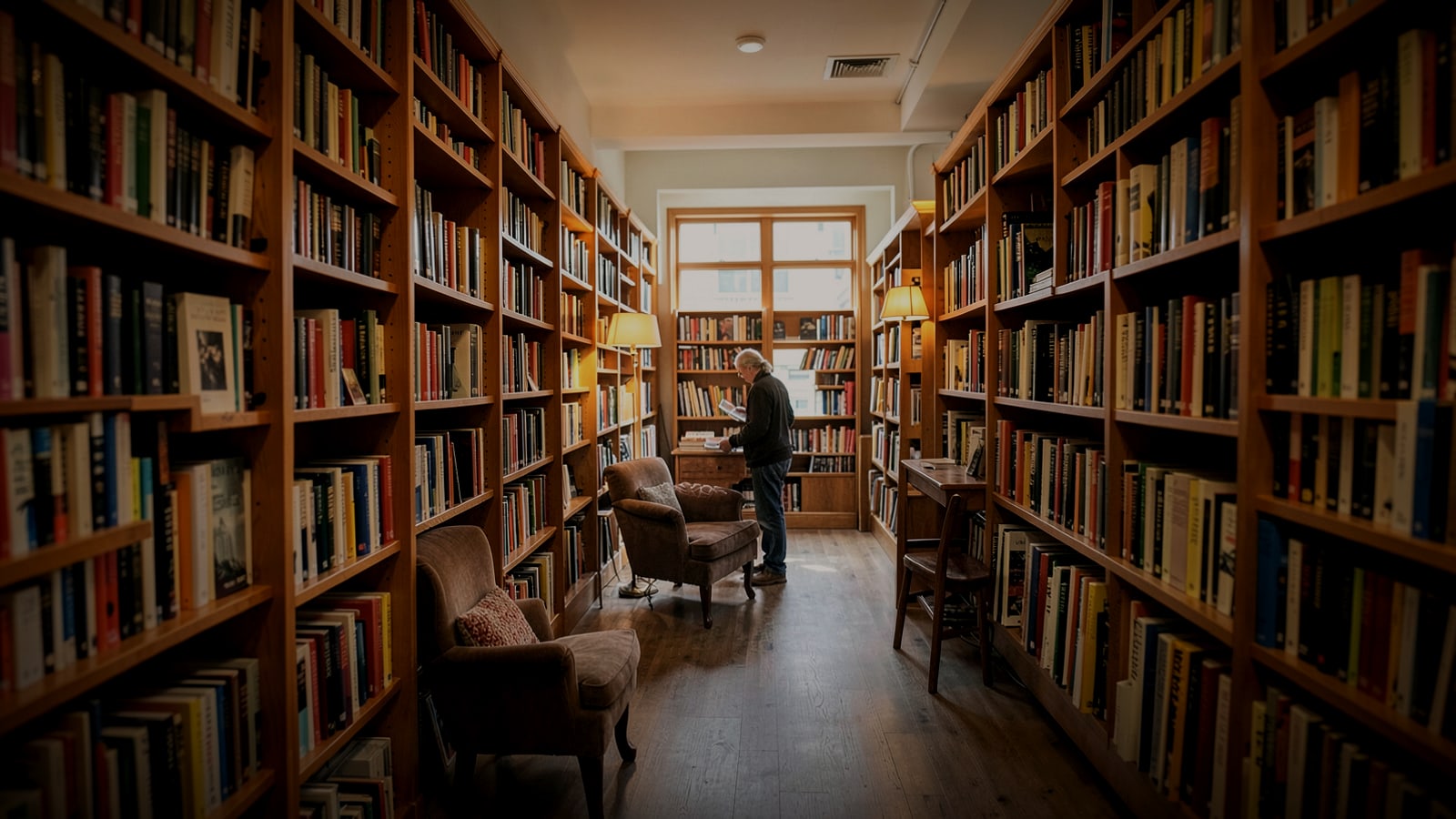
People go to bookstores to take their time. The right bookstore music makes a quiet room feel welcoming instead of awkward, and the wrong music pulls readers out of the first page. Here is how to choose tempo, vocals and volume, handle a café corner and author events, and keep your music licensed.
A bookstore is one of the few shops where customers are happy to stay for an hour and leave with one paperback. That slow, curious browsing is the whole point, and bookstore music has to protect it. Too quiet and a small shop feels tense, with every footstep and whisper audible. Too busy and it competes with the words people are trying to read.
This guide covers how to choose music for bookstores of any size: the tempo and vocal choices that suit browsing, how loud to play it in a quiet room, how to handle a café corner and events, and how licensing works for music you play to customers.
Why bookstore music is different from other retail
Most retail music is about energy: moving people through the store and lifting the mood. A bookshop wants the opposite. Customers are reading back covers, first pages and staff recommendations. Their attention is on language.
That changes the rules in three ways:
- Words compete with words. Songs with clear lyrics in your customers' own language pull attention away from the text in front of them. Many people find it harder to read while someone is singing.
- Silence is not neutral. In a small, quiet shop, silence makes people self-conscious. Customers lower their voices, avoid conversations with staff and leave sooner. A soft bed of music gives them privacy.
- Time is on your side. Unlike a fast-fashion store, you do not want people to move quickly. Slow, unhurried music supports the pace you want.
Tempo: slow and steady for browsing
The best-known field evidence on tempo in retail comes from a supermarket study by Ronald Milliman. Shoppers moved through the store more slowly when slow-tempo music played, and average daily sales volume was higher on slow-music days than on fast-music days (Milliman, 1982, Journal of Marketing).
It was one store, decades ago, and a supermarket is not a bookshop. But the direction matches what booksellers see: slower music suits browsing, and browsing is how books get discovered. As a working guide, most of your music should sit at a relaxed, walking-pace tempo or slower, with no sudden changes in energy.
Instrumental or vocals?
For the main floor, instrumental music for bookstores is the safer default. Good choices include:
- Jazzy and chillhop instrumentals. Soft piano, brushed drums, mellow bass. Warm without demanding attention. The chill genre in our catalog is built from this kind of material at slow tempos.
- Acoustic guitar and piano pieces. Classic bookshop sound, especially in shops with wood shelves and armchairs.
- Gentle ambient music. Useful for very quiet rooms and poetry or philosophy sections, as long as it is not so sparse that it feels like silence with a hum.
Vocals are not forbidden. Soft vocals in a language most of your customers do not speak, or quiet vocal tracks with long instrumental passages, can add warmth. Children's sections can also handle more playful, family-friendly songs. What to avoid is chart pop with strong hooks and clear lyrics. It is designed to grab attention, which is exactly what you do not want.
How loud should music be in a bookshop?
Bookshop background music should be felt more than heard. A good benchmark: a customer standing between two shelves should notice there is music if they listen for it, but should not have to raise their voice to ask a bookseller a question.
- Set the level when the shop is quiet, then check it again at your busiest hour. A full shop needs a little more, not a lot more.
- Spread the sound. Several small speakers at low volume sound better than one speaker turned up. Bookshops with deep aisles often have dead corners and loud spots near the speaker.
- Mind the till. Keep speakers away from the counter so staff can hear customers clearly.
- Remember that books absorb sound. Full shelves soak up a lot of high frequencies, so a bookshop can sound duller than you expect. A little treble helps clarity at low volume.
Our guide on how loud background music should be has practical targets and a simple conversation test.
Zones: café corner, children's section and events
The café corner
If you serve coffee, you have a second space with different needs. A library cafe music style can be a touch warmer and more rhythmic than the shop floor, but it should still blend in. If both areas share one sound system, choose music that suits the quieter area and simply let the café be a little louder through conversation.
The children's section
Families bring energy. Playful, cheerful music with clean lyrics fits a children's corner, as long as it does not spill into the rest of the shop. If you cannot zone the sound, keep one calm playlist for the whole store and let the children provide the energy.
Author events and readings
Turn the music off for readings, signings and book clubs. Use music before the event while people arrive and afterward during signing, then fade it out when the speaker starts. If your event involves live music or recorded music played as part of the program, check that your licensing covers it, because background music licenses are often limited to background use.
Background music for reading spaces: a simple weekly plan
- Weekday mornings: very calm, mostly instrumental. Regulars, retirees and people with time to browse.
- Weekday lunchtime: slightly warmer, still instrumental. Office workers on a short break.
- After school: calm on the main floor, more playful in the children's area if zoned.
- Weekends: the busiest time for most bookshops. Keep the mood relaxed but raise the level a notch for the fuller room.
- Evening events: music for arrival, silence for the reading, soft music for the signing.
Licensing music for a bookstore
Under U.S. copyright law, the owner of a musical work has the exclusive right to perform it publicly (17 U.S.C. 106). A bookstore open to customers is a public place, so playing music there generally needs a public performance license, whatever the size of the shop. Consumer streaming apps and personal accounts are licensed for personal use.
Your options are licenses from the performing rights organizations that represent the songs you play, plus a music source that allows business use, or a business music service that includes the performance license for its own catalog. Our guide to background music for retail stores covers the options for shops in general.
WeavyAudio is a business service of the second kind. The catalog is original and owned by WeavyAudio, and a subscription includes a license to publicly perform it at your registered location, as described in section 3 of our terms. Other music, live performers and events with their own programs still need their own licensing.
Bookstore music checklist
- Default to slow, instrumental music on the main floor.
- Avoid chart pop and songs with prominent lyrics in your customers' language.
- Set the volume low, test it at the busiest hour, and spread it across several small speakers.
- Treat the café and children's areas as separate zones if you can.
- Turn music off for readings and back on for signings.
- Rotate enough music that staff do not hear the same tracks every day.
- Use a music source that is licensed for business premises.
Our page on music for retail stores shows how other shop types use mood and tempo. When you want a licensed catalog for your shop, you can see the plans.
FAQ
What is the best music for a bookstore?
Slow, mostly instrumental music works best for most bookstores: jazzy chillhop, acoustic guitar, soft piano and gentle ambient pieces. It fills the silence without competing with the words customers are reading.
Should a bookstore play music at all?
Most do, because complete silence in a small shop makes customers self-conscious. The goal is a soft background that gives people privacy to browse and talk, not music they actively listen to.
Are lyrics bad for bookstore music?
Not always, but songs with clear lyrics in your customers' own language compete with reading. Keep vocals for the café corner or children's section, or choose soft vocal tracks that stay in the background.
Does a small independent bookstore need a music license?
Generally yes. Playing music where customers can hear it is a public performance, regardless of shop size. Use licenses from the relevant organizations or a business music service whose catalog is licensed for your location. This is general information, not legal advice.
Bookstore Music: What Else to Know
Bookstore music is a delicate balance between atmosphere and distraction. A quiet background hum can create an intimate space for readers to focus on language, while a busy mix or loud lyrics can pull attention away from books. For example, jazz standards with acoustic piano and gentle strings – think Billie Holiday or Chet Baker – are often used in bookshops because they evoke a sense of calm without overpowering the page.
How do I find music that's suitable for my bookstore?
Look for instrumental tracks or soft vocal performances that don't compete with reading. Avoid energetic mixes, loud percussion, and lyrics that might distract from the written word. Consider genres like acoustic guitar, piano jazz, or ambient electronic – these can create a soothing background without overpowering conversation.
Can I play music in my children's section?
Yes, but keep it gentle and kid-friendly to avoid overwhelming young readers. Opt for lullaby-inspired tracks, nursery rhyme covers, or soft instrumental soundscapes that won't compete with reading time. A quiet corner with its own playlist can create a cozy space for kids to explore books together.