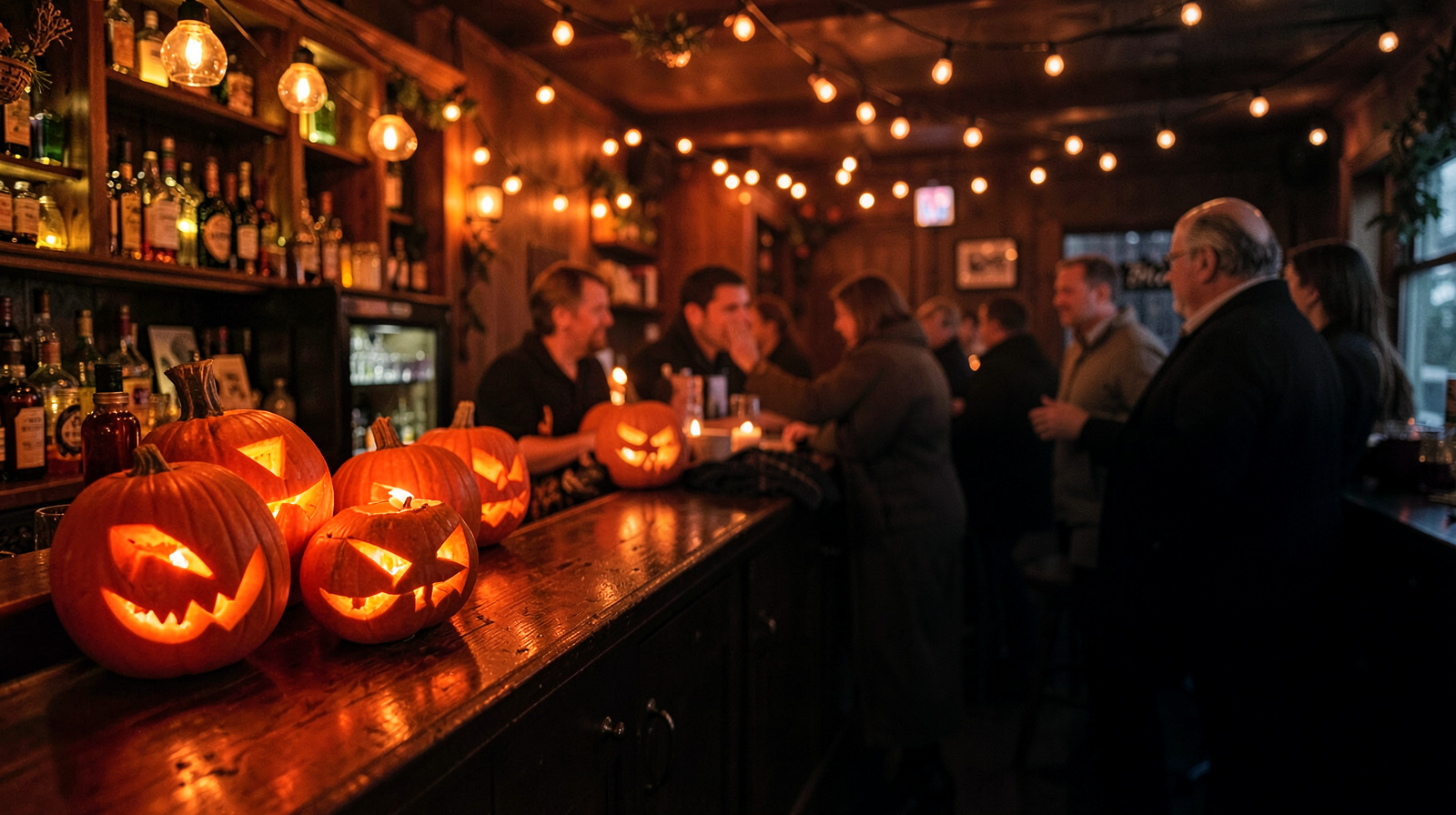
Halloween 2026 falls on a Saturday, which turns it into a full weekend for bars and restaurants. Here is a week-by-week October music plan, venue-by-venue advice, the mistakes that make seasonal playlists grate, and how to keep it all licensed.
Halloween is the one holiday where guests expect a venue to get a little strange. Decorations go up, staff wear costumes and the bar menu grows a few blood-red cocktails. Music is the cheapest way to make all of that feel coherent, and the easiest way to get it wrong.
This year the timing is unusually good for hospitality: October 31, 2026 falls on a Saturday, so Halloween becomes a full Friday-and-Saturday weekend rather than a school night. This guide to Halloween background music for business gives you a week-by-week plan for October, advice for each type of venue, the mistakes that make seasonal playlists grating, and a short checklist for staying licensed.
Why Halloween is worth planning for
The National Retail Federation's 2026 Halloween survey, published on September 22, expects consumer spending on the holiday to reach $13.5 billion. According to the same survey, 74% of consumers plan to celebrate, planned spending averages $115.14 per person, and 13% plan to make Halloween purchases at local and small businesses, almost double the 7% recorded in 2016.
Those figures describe shopping for candy, costumes and decorations rather than visits to bars or restaurants, so treat them as a measure of enthusiasm, not a forecast for your covers. The practical point stands: a large share of your guests will arrive in a Halloween mood, and a room that ignores the season can feel oddly flat.
Spooky is a dial, not a switch
Before choosing a single track, decide how far you want to go. Most venues fit one of three settings:
- A hint. Your normal music, with a few darker, minor-key tracks mixed into the evening. Guests notice a mood rather than a theme.
- Theme nights. Normal music most of the month, then clearly themed blocks on specific evenings, usually the last weekend and Halloween itself.
- Full immersion. A haunted-bar concept or pop-up where the whole evening is designed around the theme.
Family restaurants, cafés and most shops belong at setting one or two. Bars, lounges and late-night kitchens can go to three, but usually only after dark.
A week-by-week October plan
The percentages below are starting points to adjust by ear, not rules from research.
- October 1 to 11: keep daytime normal. After dark, let roughly one track in ten come from darker, moodier material.
- October 12 to 25: raise the share to between 10% and 25% in evening dayparts. Add one themed night per week if your venue runs events.
- October 26 to 29: up to a third of the evening rotation can lean dark. Brief staff on the plan for the weekend.
- Friday, October 30 and Saturday, October 31: full themed blocks from early evening, with a clear peak around costume contests or party hours.
- Sunday, November 1: switch everything back before opening. Nothing dates a room faster than leftover Halloween music.
Change dayparts gradually. A slow drift from warm to dark over twenty minutes feels intentional; a hard switch feels like someone grabbed the wrong playlist.
What to play, by venue
Bars and lounges
This is where dark music earns its keep. Brooding house, cold techno and slow, heavy hip-hop beats create tension without resorting to novelty songs. Our dark mood collection and the Dark Vibes playlist are built around that sound, and techno works for the later, busier hours when the room can take more drive. Keep early evening moody but relaxed, peak during the costume crowd, then bring the tempo down for the last hour.
Restaurants
Dinner service still needs conversation. Keep the core of the evening warm and mellow, and let the theme show up as a wink: a few minor-key or cinematic tracks between the regular rotation, a slightly darker mix after 9 p.m. If families dine early, save anything intense for later seatings.
Retail stores
Aim for fun rather than fright. Shoppers browse longer in a room that feels playful, and children should not leave in tears. Upbeat tracks with a spooky flavor work better than anything harsh, and the volume should stay at your normal level. Themed music belongs mostly in the last two weeks of the month, when seasonal merchandise is at its peak.
Cafés
A café can lean into the cozy side of October: moody, low-key tracks on grey afternoons, then back to your usual morning energy. Nobody wants menace with their first coffee.
Gyms and studios
Themed classes are a natural fit. Dark, driving tracks at workout tempo turn a Halloween ride or circuit session into an event without any gimmicks.
Five things that ruin a Halloween playlist
- Startling sound effects. Screams, crashes and sudden stings make guests jump and can be genuinely distressing for children and staff carrying hot plates. Leave effects to haunted houses.
- The same three novelty hits. A handful of famous Halloween songs on repeat wears thin by day two. Mood carries further than novelty.
- Theming the whole day. Most venues only need the theme in the evening. Mornings and lunches can stay normal until the final week.
- Letting volume creep up. Party energy tempts staff to turn it up. If two people at a table have to raise their voices, it is too loud.
- Forgetting your team. Staff hear the playlist for entire shifts. Rotate often and give them a way to flag tracks that grate.
Keep it licensed
The best-known Halloween songs are copyrighted works like any other popular music. Playing them where customers can hear them is a public performance, which generally requires permission from the copyright owners, usually through performing rights organizations. A personal streaming account does not cover it either; we explain why in Can I Play Spotify in My Store?
Themed parties add another layer. If you book a DJ for Halloween night, do not assume the DJ is covering the music licensing. ASCAP's licensing FAQ states that everyone who participates in or is responsible for a performance is legally responsible, and that it is the business owner who obtains the license.
An original, fully cleared catalog removes the background-music part of that problem. If you want something that exists nowhere else, you can request a custom track for your venue; the form is currently free during launch. This is general information, not legal advice.
Your October checklist
- Pick your setting: hint, theme nights or full immersion.
- Put the week-by-week plan in the shared calendar, including the November 1 reset.
- Build a separate evening rotation instead of editing your everyday playlist.
- Ban startling sound effects in customer areas.
- Walk the room at peak on the last Friday and check volume at a table, not at the bar.
- Confirm who holds the licenses for any live music, DJ or party entertainment.
If you want a fully cleared catalog for the whole season, you can start a WeavyAudio free trial and set up your October rotation in an afternoon.
FAQ
When should a business start playing Halloween music?
Most venues only need themed music in the second half of October, and mostly in the evening. Start with a light touch in early October and build toward the final weekend, then remove it all on November 1.
Can I play famous Halloween hits in my bar?
Only with the right licenses. Well-known Halloween songs are copyrighted, so public playback generally needs performance licenses, usually from the PROs. Original, fully cleared music avoids that for background playback.
Is Halloween music appropriate in a family restaurant?
Yes, if you keep it playful. Use mood rather than scary effects, keep the theme light during family seatings and save darker material for later in the evening.
What is the best Halloween background music for a store?
Upbeat tracks with a spooky flavor, at your normal volume, played mainly in the last two weeks of October. Avoid screams or harsh effects that can upset children.
Do I need a separate license for a Halloween party with a DJ?
Check before the event. According to ASCAP, the business owner is the one who obtains the performance license for music played at the venue, including music played by DJs.