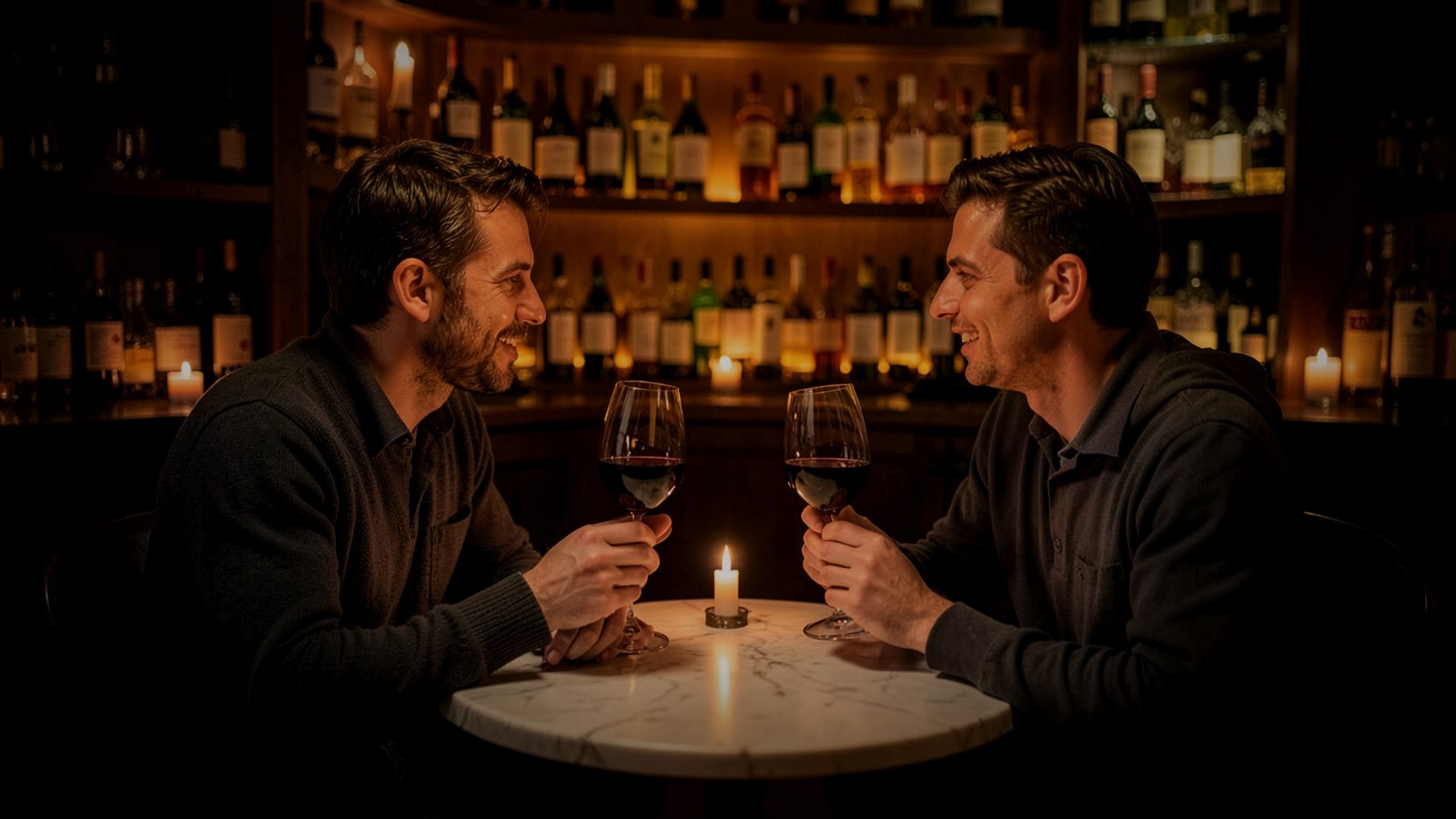
A wine bar sells conversation as much as wine, and the music sets the tone for both. Here is what research says about music and wine choices, how to plan wine bar music from the early pour to last call, how loud to play it, what to do at tastings and how licensing works.
People come to a wine bar to talk. They sit longer than in a cocktail bar, order slowly, ask questions about what is in the glass and often share a bottle over two hours. Wine bar music has to support all of that: warm enough to make the room feel like an evening out, quiet enough for real conversation, and consistent with the story your list tells.
This guide covers music for wine bars and wine shops with a tasting counter: what research says about music and wine choice, how to plan an evening, how loud to play it, what to do at tastings and events, and how licensing works.
What research says about music and wine
Wine is one of the few products where there is well-known field research on music and choice, and both studies are worth knowing.
Music that fits the product. Adrian North, David Hargreaves and Jennifer McKendrick played stereotypically French or German music on alternate days beside a supermarket display of French and German wines for two weeks (Journal of Applied Psychology, 1999). French wine outsold German wine on French-music days, and German wine outsold French on German-music days. A questionnaire suggested customers were not aware the music had influenced them.
Style and perceived price. In a wine cellar attached to a downtown restaurant, Charles Areni and David Kim alternated classical and Top-40 music on Friday and Saturday evenings over about three months (Advances in Consumer Research, 1993). With classical music, customers spent more, not because they bought more bottles but because they chose more expensive ones. The authors noted limits, including the lack of a no-music condition.
Both are single-location studies from decades ago, and neither promises a result for your bar. What they do support is a principle: music that fits the product and signals quality can shape what people choose. Our roundup of research on how music affects sales covers these and other studies in more detail.
What fit means for a wine bar
You do not need to play French music every time someone orders Burgundy. Fit is about the overall character of the room.
- Match the list. A natural wine bar with small producers suits a different sound from a classic list of Bordeaux and Napa cabernet. Relaxed, eclectic and a little unexpected for the first, polished and timeless for the second.
- Match the region, lightly. If your list focuses on one region, occasional music with a nod to that region adds atmosphere. A whole night of it can feel like a theme restaurant.
- Signal quality. Classic jazz, soul, bossa nova, acoustic and refined instrumental music tend to read as considered and grown-up. Chart hits and aggressive tracks pull the room toward a different kind of bar.
A wine bar playlist from opening to last pour
Early evening
Guests arrive after work, often in twos. Keep it light and unhurried: jazz, acoustic, soft soul, gentle bossa nova. Mostly instrumental, low volume. The room is quiet, and music that is too present will make it feel emptier.
Peak hours
Tables fill and conversations overlap. Add warmth and a little rhythm: soul, jazz-funk, downtempo, mellow house. Our deep house catalog has warm, rolling grooves that suit this block when played low, with soft vocals and piano chords rather than club energy. Lounge music for bars works well here as long as it stays under the conversation.
Late evening
Some wine bars get livelier late, others wind down. If yours gets louder, let the music follow with a touch more groove. If it winds down, go the other way: slower, softer, more instrumental. Jazzy, slow-tempo instrumentals such as our chill genre fit the last hour well.
Closing
A small, steady lift in tempo and a slight rise in brightness signals the end of the night more politely than the lights coming up.
How loud should wine bar music be?
Lower than most bars. Guests are talking across small tables and asking staff about the wines. A good rule: two people sitting opposite each other should be able to talk at a normal level without leaning in, and a server explaining a wine should not have to raise their voice.
- Start low when the room is empty and raise it slightly as it fills. A full room absorbs sound but also produces more of its own.
- Spread the sound. Several small speakers at low volume are better than one loud speaker by the bar.
- Keep bass moderate. Heavy bass fills small rooms fast and makes conversation tiring.
- Watch the counter. Staff pouring and explaining wines need to hear guests clearly.
Wine tasting music and events
Tastings and producer evenings need a different plan from a normal night.
- Guided tastings: turn the music off or right down while the host is speaking. Guests need to hear the story of each wine.
- Walk-around tastings: low, instrumental music helps fill gaps between conversations. Keep it steady and unobtrusive.
- Pairing dinners: follow the courses. Softer during introductions, a little warmer between courses.
- Live musicians: a jazz duo or acoustic guitarist can be a lovely draw. Live performance is licensed separately from recorded background music, so check your coverage before booking.
Music for wine shops
Many wine bars also sell bottles, and plenty of wine shops run a tasting bar. The research above is most directly about retail, so it applies here too. Keep the shop floor calm and slow so people take their time browsing, and consider more refined, instrumental styles if you want the room to feel premium. If your shop focuses on a particular country, occasional music that nods to it is a light-touch way to use the fit principle.
Licensing music in a wine bar
A wine bar is open to the public, so playing recorded music there is a public performance that generally needs a license. Consumer streaming apps are licensed for personal use and do not cover it. Bars and restaurants also often have TVs and live music, and each source of music is licensed on its own terms.
The usual options are licenses from the performing rights organizations that represent the songs you play, alongside a music source that allows business use, or a business music service that includes a public performance license for its own catalog. WeavyAudio is the second kind: an original catalog owned by WeavyAudio, with a license to publicly perform it as background music at your registered location. It does not cover live performers, TVs or other music sources.
For more on bar formats, see our page on music for bars and our guide to music for breweries and taprooms, which covers a similar long-stay, conversation-led crowd.
Wine bar music checklist
- Describe the sound of your list in three words and check every playlist against them.
- Keep early evening quiet and mostly instrumental.
- Add warmth and rhythm at peak, but stay below conversation level.
- Decide whether your late evening winds up or winds down, and match the music.
- Turn music down or off for guided tastings and host talks.
- Check licensing for live musicians and events separately.
- Use a source licensed for business use rather than a personal streaming account.
When you want a licensed catalog for your bar or shop, you can see the plans.
FAQ
What music is best for a wine bar?
Jazz, soul, bossa nova, acoustic and relaxed instrumental music suit most wine bars, with warmer grooves such as downtempo or mellow house at peak hours. The key is conversation level and a sound that fits your wine list.
Does music really change what wine people buy?
Field studies have found that French music was linked with more French wine sales in a supermarket, and classical music with more expensive wine choices in a wine cellar. They are small, older studies, so treat fit as a useful principle rather than a sales guarantee.
What music should I play at a wine tasting?
Low, instrumental music for walk-around tastings, and little or no music while a host or producer is speaking. Guests need to hear the story of each wine.
Does a wine bar need a music license?
Generally yes. Playing music to customers is a public performance, and live music and TVs are licensed separately from recorded background music. This is general information, not legal advice.
Wine Bar Music: What Else to Know
Choose wine bar music that complements your list's story and supports conversation. For example, a wine bar with a focus on Italian varietals might pair well with jazz standards or acoustic guitar, while one featuring Spanish wines could benefit from flamenco-inspired rhythms. Wine bar music should be warm but not overpowering, allowing guests to linger and discuss their selections without distraction.
What if I have live music at my wine bar – do I need a separate license for background music?
Yes, you will still need a license for background music even with live performances. This is because the live act may not play continuously throughout the evening, leaving gaps in coverage that require additional licensing.
Are there any specific genres or artists that are known to be unpopular in wine bars?
Research suggests that loud rock and pop music can actually deter wine sales by creating a less sophisticated atmosphere. Avoiding these styles is more about maintaining an upscale ambiance than actively choosing "unpopular" music – focus on warm, conversational sounds instead.