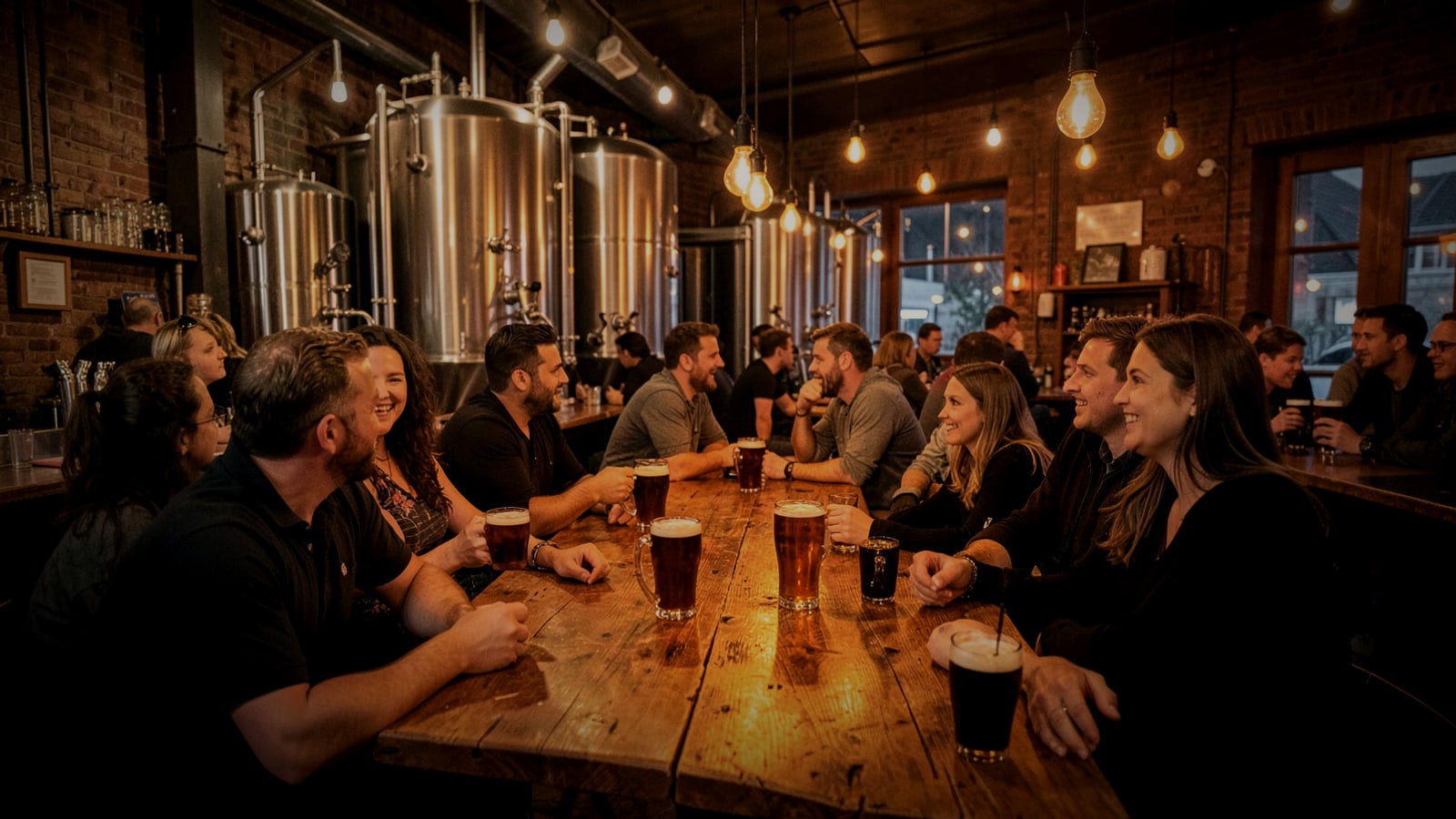
Concrete floors, steel tanks and a crowd that gets louder by the pint make taprooms hard to get right. Here is how to choose and schedule brewery music, handle trivia and live music nights, keep the beer garden neighbor-friendly, and sort out licensing.
A taproom is one of the hardest rooms in hospitality to get sound right in. Polished concrete, steel tanks, roll-up doors and high ceilings reflect every sound back into the room. The crowd gets louder as the afternoon goes on. Families and dogs share the space with a birthday group and two people trying to talk about a new job. Brewery music has to hold all of that together without turning into one more layer of noise.
This guide to music for breweries covers taproom acoustics, what to play at different times of the day and week, how to handle trivia and live music nights, beer gardens, and the licensing questions every brewery owner should settle.
Why brewery music is harder than bar music
Most bars are built around sound: soft furnishings, booths, a sound system designed for the room. Taprooms are often built around a production space. Hard, parallel surfaces mean the room stays loud long after a sound is made, which is why a taproom at 7 p.m. can feel twice as loud as a restaurant with the same number of people.
That has three practical consequences:
- Volume creep is fast. As the crowd gets louder, someone turns the music up, people talk louder over it, and the cycle repeats. Decide the levels in advance.
- Bass builds up. Heavy low end fills a hard room and muddies speech. Pull the bass back more than you would in a carpeted bar.
- More speakers at lower volume beat fewer speakers played loud. Spreading sound evenly means no table sits next to a blasting box.
Our guide to how loud background music should be has a simple method for setting levels with a phone meter. In a taproom, check it at your busiest hour, not when the room is empty.
Matching taproom music to your brand
The best brewery playlist sounds like the place. Think about who you are before you pick genres.
- Farmhouse and rural breweries: Americana, country, roots rock and acoustic songwriters fit the setting naturally. Our country collection is built on guitars, steady mid-tempo grooves and storytelling vocals.
- Urban taprooms with a younger crowd: indie pop, indie rock, soul and a light touch of electronic music. Our music for bars hub collects styles that suit evening venues.
- Family-friendly afternoon spaces: warm, familiar-sounding music with clean lyrics. Screen out explicit tracks completely if kids are in the room.
- Barrel rooms and sour-focused spaces: something slower and moodier can work, but keep it below conversation level.
Consistency matters more than any single genre. A customer who comes in three weekends in a row should recognize the feel of the room, even if the songs change.
Does music change how beer tastes?
Researchers have tested this. In a study published in Frontiers in Psychology in 2016, Reinoso Carvalho and colleagues ran tastings with 231 customers at a Brussels brewery (doi.org). Participants tasted the same beer with no label, with a label, or with the label plus a song connected to it. People who tasted with the label and the song rated the experience higher than people who tasted the beer alone, and the music also shifted some taste ratings, such as perceived sourness.
The authors list real limitations, including headphones instead of room sound and a brewery audience that may already have been enthusiastic, and it was one beer and one song. Treat it as evidence that sound is part of the tasting experience, not as a recipe. The practical lesson: a release event where the music matches the story of the beer is worth planning, and a taproom where the music clashes with the mood is costing you something.
A weekly schedule for taproom music
- Weekday opening to about 5 p.m.: mellow, low and friendly. Remote workers, retirees, parents with strollers.
- After-work, about 5 to 7 p.m.: a steady lift in tempo and a little more volume as the room fills.
- Evenings: your signature sound, still below conversation level at the tables.
- Saturday and Sunday afternoons: family- and dog-friendly; clean lyrics, warm and upbeat without being loud.
- Late weekend evenings: the most energy of the week, if your crowd and license hours support it.
- Last call: bring the energy down slowly over the last 30 minutes rather than killing the music at close.
Trivia, run clubs and events
- Trivia night: music off or very low while questions are read, then back up between rounds. The host needs control of the level, not just the playlist.
- Run clubs and group meetups: a brief lift when the group arrives, then back to normal.
- Game days: decide in advance whether TV audio or music has priority. Never run both in the same area.
- Release parties: plan the music as part of the event, with an agreed volume ceiling.
Beer garden music
Outdoor space is where neighbor complaints start. Beer garden music should be lower than you think, spread over several weather-rated speakers pointed toward the seating rather than the street, and switched off at a fixed time. Check your local noise ordinance and any conditions attached to your permits before adding outdoor speakers.
Live music nights
Live music is one of the best things a taproom can do, and one of the most misunderstood from a licensing point of view. When a band plays cover songs, those songs are still copyrighted works being performed publicly at your venue. In practice the licensing obligation usually sits with the venue, not the band. Even a singer-songwriter who plays mostly originals will often slip in a few covers.
Tell performers what you expect, keep a set list if you can, and make sure your licenses cover live performance as well as recorded music.
Brewery music licensing
This section is general information, not legal advice.
Playing copyrighted music in a taproom is a public performance. The traditional route is licenses from the performing rights organizations that represent the songwriters and publishers whose songs you play. The Brewers Association, the trade body for small and independent brewers, explained in a March 2026 update that there is no limit on how many of these organizations can exist, that breweries may technically need a license from each one whose music they play, and that it is advocating for a national database of licensed works (Brewers Association). It also suggests members contact it with licensing questions.
Our guide to ASCAP and BMI fees for restaurants and bars explains how those licenses are typically priced for food and drink venues.
The alternative for recorded music is a business music service whose catalog it owns or controls. WeavyAudio's catalog is original, and a subscription includes a license to publicly perform it at your registered location, as described in section 3 of our terms. It covers our recorded music only. Live bands, TV audio and any other music source need their own licensing. Subscriptions are per location, so a brewery with a second taproom needs a second subscription.
Taproom music checklist
- Set target levels for each zone at your busiest hour, and write them down.
- Reduce bass in hard, reflective rooms.
- Choose two or three genres that fit your brand and stick with them.
- Build a weekday, weekend and event schedule.
- Remove explicit lyrics during family hours.
- Give trivia hosts and event staff control of the volume.
- Put the beer garden on a timer and check local noise rules.
- Confirm licensing for recorded music, live music and TV audio separately.
If you want one cleared source for recorded taproom music, you can see the plans.
FAQ
What kind of music should a brewery play?
Music that fits your brand and crowd: Americana and country for rural or farmhouse breweries, indie and soul for urban taprooms, and clean, warm music for family-friendly afternoons. Consistency matters more than any single genre.
How loud should music be in a taproom?
Low enough that people at a table can talk without raising their voices. Taprooms have hard surfaces that amplify noise, so set levels at your busiest hour and cut back the bass.
Does a brewery need a license to play music?
Generally yes, if you play copyrighted music publicly. Options include licenses from performing rights organizations or a business music service that includes a license for its own catalog. This is general information, not legal advice.
Who is responsible for licensing live music at a brewery?
In practice the venue usually is, including cover songs played by bands. Check that your licenses cover live performance, not just recorded music.
Can music change how beer tastes?
A 2016 study at a Brussels brewery found that pairing a beer with a related song raised ratings of the experience and shifted some taste ratings. It was a small, specific study, so treat it as a hint rather than a rule.