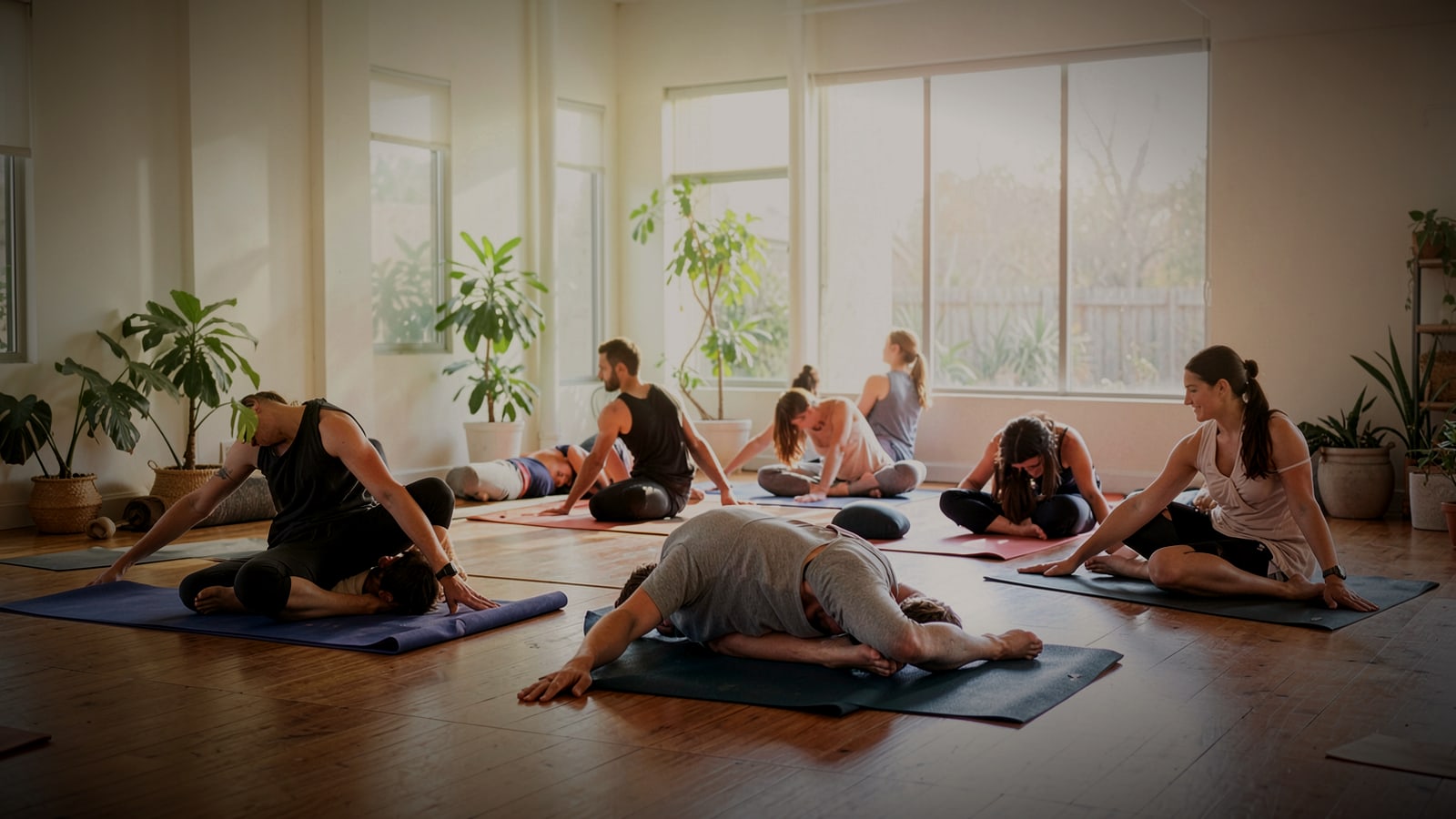
Music can carry a yoga or Pilates class, or pull students out of it. Here is how to shape a playlist around the arc of a class, which tempos and vocals suit each style, how to handle lobby and changing rooms, and why instructors streaming from personal phones is a licensing problem for the studio.
In a spin class, music drives the workout. In a yoga or Pilates class, it has a subtler job: it sets the pace of breath and movement, covers the sounds of the street and the room next door, and signals when to work and when to let go. Get yoga studio music right and students barely notice it. Get it wrong and a sudden chorus in the middle of a balance pose is the thing they remember.
This guide covers how to shape music for yoga classes and Pilates sessions around the arc of a class, how to think about tempo and vocals for different styles, what to play in the lobby, and the licensing issue that catches many studios out: instructors streaming from their own phones.
Shape the playlist around the class, not the clock
Most classes follow a similar arc, whatever the style. Build your yoga playlist in segments that match it rather than as one long list of nice tracks.
- Arrival and settling (5 to 10 minutes before class): soft, spacious, often beatless. Students are unrolling mats and quieting down.
- Centering and breath work: very quiet or silent. Many teachers prefer no music at all during pranayama or opening instructions.
- Warm-up: gentle pulse, slow and steady, still mostly instrumental.
- Main flow or work phase: the most rhythmic part. In vinyasa or power yoga this can carry a clear groove. In Pilates it supports controlled, repeated movement.
- Peak and balance: steady rather than dramatic. Avoid big builds and drops while students are balancing.
- Cool-down and stretching: tempo and density drop back down.
- Savasana or final relaxation: ambient, beatless, very low, or silence.
- Leaving: gentle music again as people roll up their mats and chat.
Timing each segment to the class length makes transitions smooth. A playlist that happens to shift energy halfway through savasana is worse than no music.
Tempo by style
There is no scientific tempo for yoga, and teachers disagree about whether music belongs in class at all. As a practical starting point, many studios use ranges like these:
- Restorative, yin and meditation: beatless ambient, drones, soft piano and nature-like textures. If there is a beat, keep it very slow and in the background.
- Hatha and gentle flow: slow, steady rhythms, often in the 60 to 90 BPM range, mostly instrumental.
- Vinyasa and power yoga: mid-tempo grooves in the main flow, perhaps 90 to 120 BPM, easing down for cool-down.
- Mat and reformer Pilates: steady, clear pulses help with controlled repetition. Mid-tempo electronic, downtempo and light house work well, kept below the teacher's cues.
- Hot yoga: keep the music simple. Students are already working hard to focus, and heat makes loud, busy music tiring.
Treat these as guides to test, not rules. The best check is whether the music fits the pace of breath the teacher is cueing.
Vocals: a deliberate choice
Lyrics compete with the teacher's voice. In a class driven by spoken cues, that is a real problem: students end up following the singer instead of the instructor.
- Instrumental by default in the main portion of class.
- Chants and devotional music only when the class is designed around them and students expect it.
- Vocal tracks can work in faster classes and in the lobby, but avoid words in savasana and during detailed alignment instructions.
- Language matters less than prominence. A soft, wordless vocal texture is fine; a catchy chorus is not.
Volume and sound in the studio
The teacher's voice is the priority. Set music so every student can hear cues clearly from the back corner without the teacher raising their voice. If you use a headset microphone, set the music level with the microphone on and balanced first.
- Speakers: place them so the sound spreads evenly across the room, not from one box by the teacher's mat. Two or four small speakers at low level beat one loud one.
- Controls: give teachers a simple wall control or tablet app, with a sensible maximum set in advance.
- Transitions: use crossfades so tracks never stop abruptly and restart loudly.
- Silence: keep the option to fade music to nothing for centering or savasana without fumbling with a phone.
The lobby, changing rooms and retail area
Outside the studio, the music does different work. The lobby is where students arrive stressed from work and leave relaxed after class. Calm, warm music with a gentle pulse helps both. Keep it lower during check-in so front-desk conversations are easy, and choose a slightly different program from the classes so students do not hear the same tracks twice in an hour. Our spa music hub covers the calm, unhurried end of the spectrum that suits reception and changing areas.
The instructor phone problem
This is where many studios have a gap. A teacher plugs a phone into the studio speaker and plays a personal streaming playlist. It sounds harmless, but personal streaming accounts are licensed for personal listening, not for classes open to the public.
Under U.S. copyright law, performing a work publicly includes performing it at a place open to the public or where a substantial number of people outside a normal circle of family and friends gather, as defined in 17 U.S.C. 101. A paid class in a studio fits that definition. Our guide to gym music and fitness class licensing explains that the club or studio, not the individual instructor, is generally responsible for licensing, even when instructors are independent contractors.
Practical options for a studio:
- License mainstream music through the performing rights organizations and use a source whose terms allow business use.
- Use an original catalog licensed for venue play for classes and the lobby, and let instructors choose from it.
- Write a music policy so every teacher knows which sources are allowed, including substitutes and guest teachers.
WeavyAudio's catalog is original and a subscription includes a license to publicly perform it at your registered location, so teachers can pick from it for classes held there. Instructors' personal playlists from consumer apps are not covered by anything we provide. Our gym and fitness hub shows higher-energy options for Pilates and power classes.
Yoga and Pilates studio music checklist
- Map your class arc into segments with target lengths.
- Set tempo ranges per class style and test them with teachers.
- Default to instrumental music during cues, balance and savasana.
- Balance music under the teacher's voice or microphone.
- Spread sound with several small speakers and a simple, limited control.
- Run a separate calm program for the lobby and changing rooms.
- Write a music policy that names approved, licensed sources.
- Review playlists monthly so regulars do not hear the same class every week.
If you want a licensed catalog your teachers can draw on for classes and the lobby, you can try WeavyAudio.
FAQ
What is the best music for yoga classes?
It depends on the style. Restorative and yin classes suit beatless ambient music, gentle flow suits slow instrumental tracks, and vinyasa or power classes can take mid-tempo grooves. Keep lyrics out of cue-heavy parts of class.
Should yoga music have lyrics?
Mostly no during instruction, balance and savasana, because lyrics compete with the teacher's voice. Vocals can work in faster classes, chant-based classes and the lobby.
What tempo is good for Pilates music?
Many studios use steady mid-tempo music with a clear pulse, kept below the instructor's cues. Test with your teachers rather than relying on a single number.
Can yoga instructors play their own Spotify in class?
Personal streaming accounts are licensed for personal use, not public classes. The studio is generally responsible for licensing, so set a policy that names approved business-licensed sources.
Do I need a license for yoga class music?
Usually, yes. A class open to the public is a public performance under U.S. law. Use PRO licenses with a business music source, or an original catalog licensed for business playback. This is general information, not legal advice.