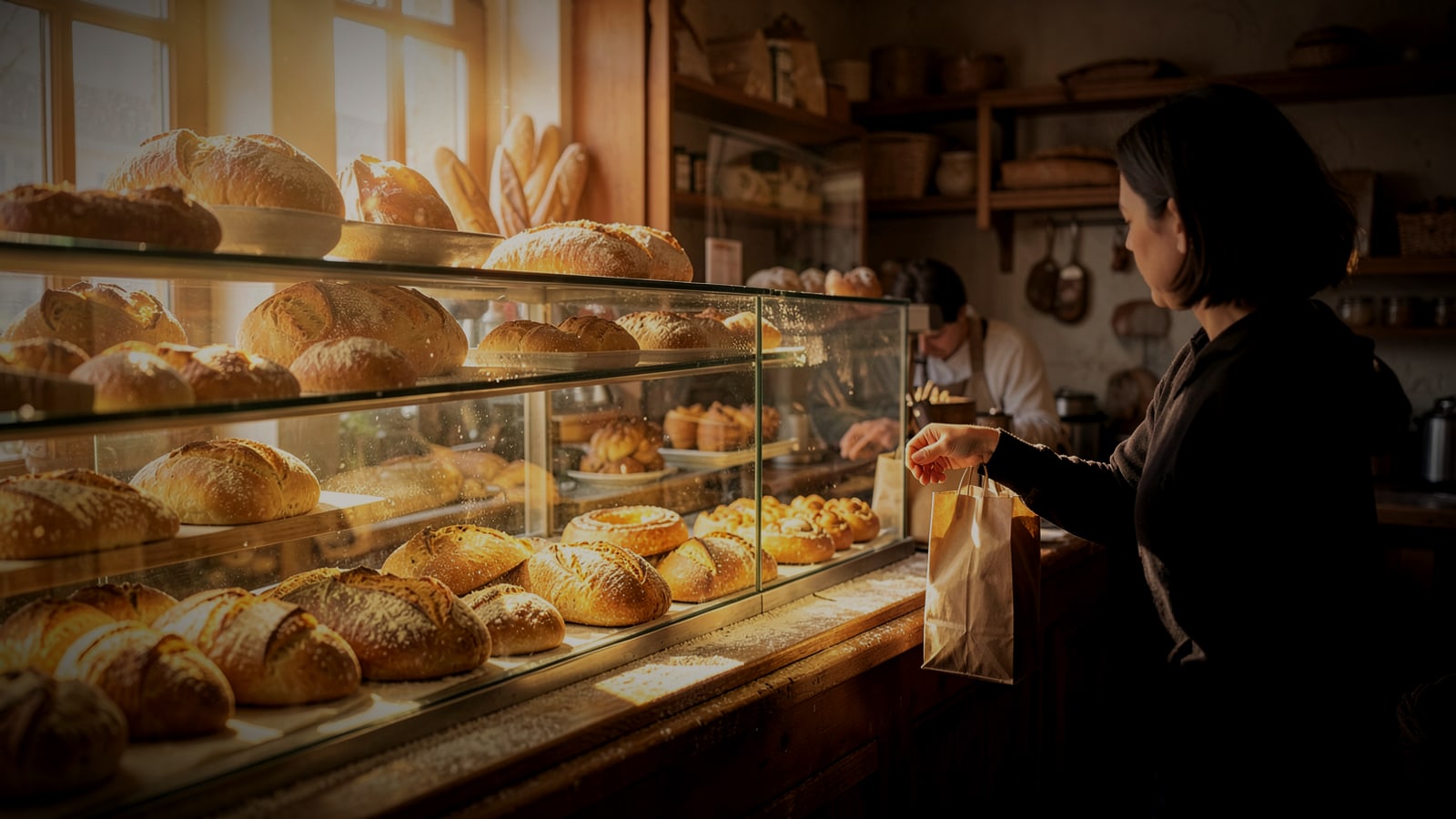
A bakery has three audiences in one small room: the early queue, the people lingering over coffee and cake, and the staff who have been there since before dawn. Here is how to plan bakery music by time of day, set the volume, handle licensing and avoid the mistakes that make a sweet shop sound sour.
Bakery music has a harder job than it looks. The same small room serves a fast morning queue, a slower mid-morning crowd with coffee and pastries, and often an afternoon of cake, ice cream or school pickups. Behind the counter, the team has usually been working since before sunrise and will hear every track many times. A single playlist left running all day rarely suits all of that.
This guide covers how to choose music for bakeries, pastry shops and dessert shops: what to play at each point of the day, how loud it should be, what research says about sound and taste, and how licensing works when you play music to customers.
What bakery music needs to do
Before choosing a genre, be clear about the jobs the music has in your space.
- Set the tone at the door. A bakery sells warmth, freshness and a small treat. The first few seconds of sound should match that, just as the smell of bread does.
- Keep the queue relaxed. Morning lines move fast, but people still notice when they wait. Pleasant, familiar-feeling music makes a short wait feel easier.
- Cover the gaps. Small rooms with hard surfaces carry every conversation, every milk steamer and every tray landing on steel. Music at the right level masks those sounds without adding to the noise.
- Suit the seating. If you have tables, you have two businesses: a counter and a café. Seated customers need calmer music than the queue.
- Keep the team going. Your staff hear the music for eight hours or more. Variety matters as much as mood.
A dawn-to-close plan for bakery music
Most bakeries follow the same rhythm, even if the hours differ. Use this as a starting point and move the blocks to match your own traffic. Our guide to music dayparting explains the method in more detail.
Before opening
This block is for the team. Upbeat music helps with the early prep, and nobody else is listening. The one rule: switch to the customer schedule before the doors open, so the first guest does not walk into the kitchen playlist.
The morning rush
Commuters want coffee, bread and a pastry, then they want to leave. Choose bright, mid-tempo music with a clear rhythm and friendly melodies. Vocals are fine here, but keep them light. The goal is a lively room and a queue that feels like it is moving.
Mid-morning and lunch
Traffic slows, tables fill with people meeting friends or working. Bring the tempo down a little and lean toward warm acoustic, soft soul or relaxed instrumental tracks. Jazzy, laid-back instrumentals work especially well in bakeries: they feel handmade and unhurried, which is the story most bakeries want to tell. The chill genre in our catalog is built from exactly that kind of material: brushed drums, soft piano and jazz guitar at slow tempos.
The afternoon treat
Dessert shop music has its own rhythm. Dessert shops and ice cream parlors often peak in the afternoon and early evening, with families and groups of friends. Lift the energy back up with cheerful, bright music, but keep lyrics family-friendly. This is the block where pastry shop background music can be a little more playful, and where most music for ice cream shops should live all day.
The last hour
Many bakeries sell out and close early. A small lift in tempo in the last half hour signals the end of the day more politely than stacking chairs, and it helps the team through the clean-down.
What research says about sound and taste
There is a growing body of research on how sound affects the way food is perceived, often called sonic seasoning. One often-cited lab study had participants taste the same bittersweet cinder toffee while listening to a soundtrack designed to feel sweet, one designed to feel bitter, or no sound. The toffee was rated as more bitter with the bitter soundtrack than with the sweet one (Crisinel and colleagues, Food Quality and Preference, 2012). The researchers linked sweetness with higher-pitched sounds and bitterness with lower-pitched ones.
That is a lab study with specially made soundscapes, not a field test in a bakery, and later work has not always found the same effects. Treat it as a reason to think about the character of your music, not as a way to make pastries taste sweeter. The practical lesson is modest: bright, light, higher-register music fits the feeling of a pastry case, while heavy, bass-driven tracks work against it.
How loud should music be in a bakery?
Small bakeries tend to be loud rooms. Tile floors, glass cases, steel counters and espresso machines reflect sound, so music that seemed quiet at 6 a.m. can be too loud once the queue forms and everyone is talking over it.
- Use the conversation test. A customer at the counter should be able to give their order without raising their voice, and staff should hear it the first time.
- Adjust with the room. Turn the volume up a notch when the room is full and back down when it empties. A full room absorbs sound but also makes more of its own.
- Watch the bass. Small speakers turned up with heavy bass sound muddy and tiring. Keep the low end moderate.
- Point speakers at the seating, not the till. Staff taking orders need to hear customers, not the music.
Our coffee shop music guide covers speaker placement and levels for small food spaces in more detail.
Five mistakes that make a bakery sound wrong
- The radio left on. Commercial radio brings ads, news and talk into a space you have designed carefully, and it may not be covered for business use the way you assume.
- One short playlist. A three-hour playlist on repeat will be heard two or three times in a long shift. Staff notice, and regulars do too.
- Club music at breakfast. Energetic dance tracks can work in the afternoon at a dessert bar, but they fight the calm, handmade feel most bakeries want in the morning.
- Explicit lyrics in a family space. Dessert shops and ice cream parlors attract children. Preview anything with vocals before it goes on your speakers.
- Someone's personal phone. Staff playlists on personal streaming accounts are the most common setup and the most common licensing problem.
Licensing: playing music in a bakery legally
Under U.S. copyright law, playing music "publicly" includes performing it at a place open to the public (17 U.S.C. 101). A bakery counter or dessert shop is exactly that, so the music you play there needs a public performance license. Consumer streaming subscriptions are licensed for personal use, not for business premises.
In practice, most small food businesses choose one of two routes: licenses from the performing rights organizations that represent the songs they play, alongside a music source that allows business use, or a business music service whose catalog comes with its own public performance license.
WeavyAudio is the second kind. Our catalog is original and owned by WeavyAudio, and the subscription includes a license to publicly perform it at your registered location, as set out in section 3 of our terms. It covers background music at that location only. It does not cover other music you play, TV audio, live performers, or using the music in videos or ads. Pricing is one flat fee per location, with no per-track charges.
Background music for a bakery café: a quick setup checklist
- Map your day into three to five blocks and write a one-line brief for each.
- Choose mid-tempo, bright music for the rush and calmer instrumental music for the seated hours.
- Set the volume with the conversation test at the counter, then again when the tables are full.
- Keep lyrics clean if children visit, especially in dessert and ice cream shops.
- Use collections long enough that staff will not hear the same song twice in a shift.
- Move music off personal phones and onto a source licensed for business use.
- Review with the team after two weeks and adjust the blocks that feel wrong.
For more ideas that carry over from cafés, see our page on music for coffee shops. When you are ready to put a licensed catalog on your speakers, you can see the plans.
FAQ
What kind of music is best for a bakery?
Most bakeries do well with bright, mid-tempo music in the morning rush and calmer, jazzy or acoustic instrumental music when customers sit down. Avoid heavy bass and aggressive tracks, which work against the warm, handmade feel most bakeries want.
What music works in ice cream and dessert shops?
Cheerful, upbeat music with family-friendly lyrics suits most dessert shops and ice cream parlors, especially in the afternoon and early evening. Keep the volume low enough for families to talk and order easily.
Do I need a license to play music in my bakery?
Generally yes. A bakery is open to the public, so playing music there is a public performance. You need either licenses from the organizations that represent the songs you play or a business music service that includes a public performance license for its catalog.
Can I play the radio in my bakery?
There is a narrow exemption in U.S. law for some small businesses playing broadcast radio, with conditions on size and equipment. It does not cover streaming apps or your own playlists. Our licensing guides explain the details; this is general information, not legal advice.