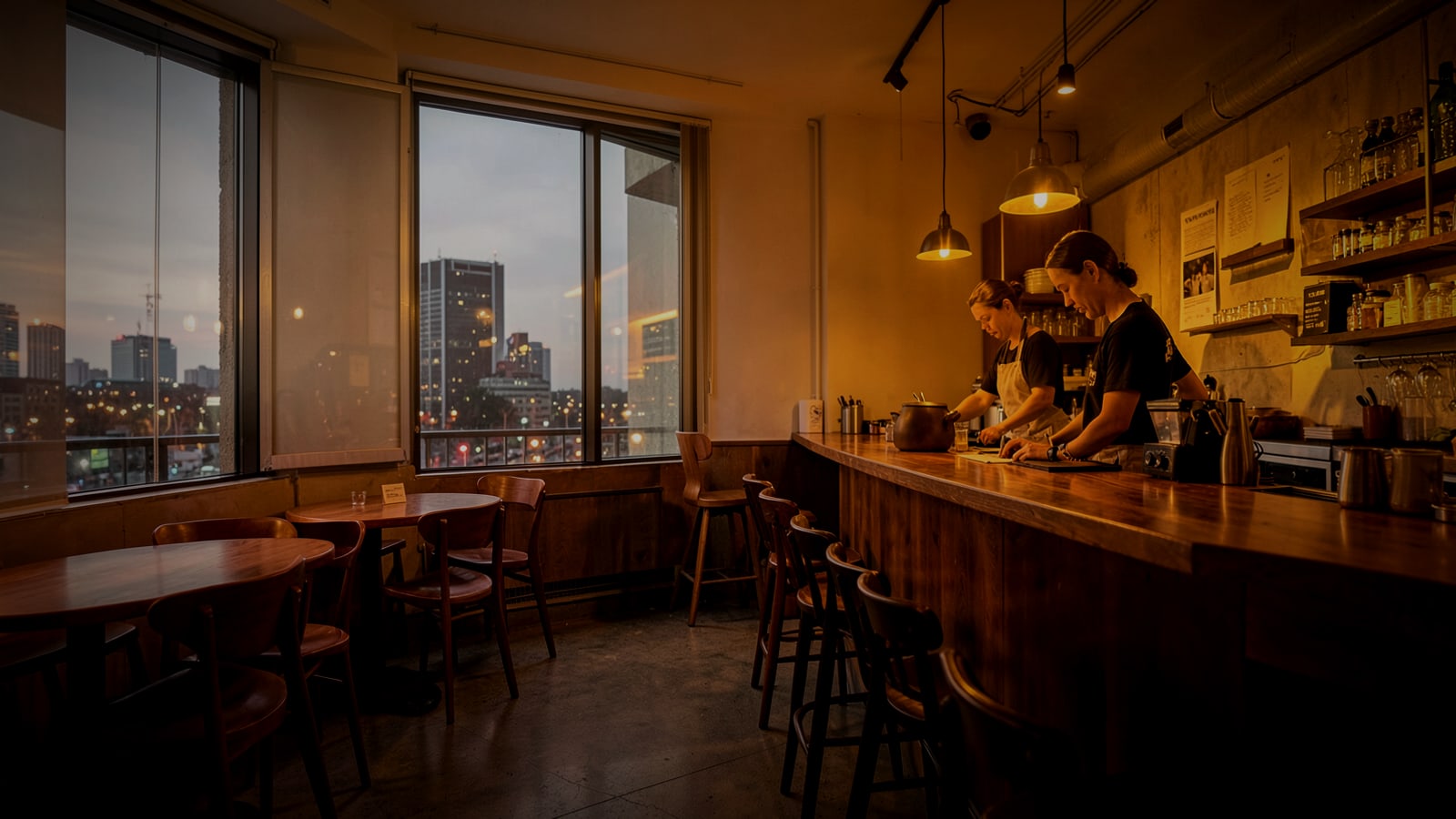
The same playlist at 8 a.m. and 8 p.m. is almost always wrong for one of them. Music dayparting means planning energy, tempo and volume by time of day. Here is what research says about tempo, how to build your blocks, and sample schedules for cafes, restaurants and stores.
Walk into most small businesses at 9 a.m. and again at 7 p.m. and you will hear the same playlist at the same volume. That is rarely a decision. Someone pressed play when the doors opened and nobody touched it again. The room, the customers and the job the music has to do all changed during the day. The music did not.
Music dayparting is the fix. The term comes from broadcasting, where radio and TV split the day into parts such as morning drive, midday and evening, and program each one for the audience listening at that time. For a business, it means dividing your trading day into a few blocks and deciding, for each one, what energy, tempo, vocal density and volume the room needs. This guide explains why it works, how to build your own background music schedule, and gives sample schedules you can adapt.
Why music dayparting works
Background music does two jobs at once. It sets the mood of a space, and it quietly nudges the pace at which people move, eat and talk. Both jobs change with the time of day.
The best-known evidence comes from two field studies by Ronald Milliman. In a supermarket, he found that shoppers moved more slowly with slow-tempo music, and average daily sales were higher on slow-music days than on fast-music days (Milliman, 1982, Journal of Marketing). In a restaurant, dining parties exposed to slow music stayed at their tables longer, 56 minutes on average versus 45 with fast music, and spent more at the bar, while food spending did not change significantly (Milliman, 1986, Journal of Consumer Research).
Those studies are old, each covered a single business, and tempo was only one of many things going on. Treat them as evidence that tempo shifts behavior, not as a promise of a specific sales lift. Our research roundup on how music affects sales covers them and later work in more detail.
The practical takeaway is what matters. Slower music suits the moments when you want people to settle in, and faster music suits the moments when you want flow and turnover. Very few businesses want the same thing all day, which is exactly why music by time of day beats a single playlist.
The four levers you can adjust
Before building blocks, know what you can actually change between them.
- Tempo. The speed of the music, measured in beats per minute. As a rough working guide, slow material sits under 90 BPM, mid-tempo around 90 to 115, and upbeat material above that. Milliman defined his slow condition as about 72 BPM or fewer and his fast condition as about 92 BPM or more.
- Energy. How busy and bright the music feels: drums, bass, brightness, density. Two tracks at the same tempo can feel completely different.
- Vocal density. Instrumental tracks sit in the background. Vocal tracks, especially in your customers' language, pull attention and compete with conversation.
- Volume. Often the biggest lever and the one most neglected. A room with 5 people and a room with 50 people need very different levels. Our guide on how loud background music should be gives practical targets.
A good dayparting plan changes two or three of these at a time, gradually, rather than jumping from ambient piano to club music at noon.
How to build a background music schedule in five steps
- Map your real day. Write down your opening hours, then mark when traffic peaks, when it is quiet and when the customer type changes. A coffee shop's 7 a.m. commuters and its 2 p.m. laptop crowd are different audiences.
- Define three to five blocks. Fewer is easier to maintain. Most businesses land on opening, peak, lull, second peak and closing, or a subset of those.
- Write a one-line brief for each block. For example: "Lunch rush, upbeat, vocals fine, medium-high volume, keep people moving." The brief matters more than the exact tracks.
- Assign playlists or moods to each block. Use collections long enough that regulars and staff do not hear the same songs every day. A block that runs four hours needs well over four hours of music in rotation.
- Automate and review. If your system can switch on a schedule, set it up. If not, put the switch times on the staff checklist. Review after two weeks: ask staff which blocks feel wrong, and watch how the room behaves.
Sample schedule: coffee shop
- Opening to 9:30 a.m., the commuter rush: upbeat, bright, mid-to-fast tempo, vocals fine, volume moderate. The goal is energy and a line that keeps moving.
- 9:30 a.m. to noon, settled morning: warmer, mid-tempo, more instrumental, volume a notch lower for people working and meeting.
- Noon to 2 p.m., lunch: a small lift in energy and volume as the room fills.
- 2 p.m. to close, the laptop afternoon: calm, mostly instrumental, lo-fi or chill, low volume. This block is where long stays happen, so decide whether you want them.
- Last 30 minutes: slightly more energy and a touch more volume. It signals the end of the day more politely than stacking chairs.
Sample schedule: full-service restaurant
A restaurant music schedule follows service rather than the clock, so adjust these blocks to your own hours.
- Prep and opening: a livelier block can help the team through setup, but switch to the guest schedule before the doors open.
- Lunch service: mid-tempo, light vocals, moderate volume. Most lunch guests have limited time, and the music should not slow them down.
- Afternoon lull: quieter, mellow, low volume for the few tables in.
- Early dinner: warm and relaxed, a touch more presence than lunch.
- Peak dinner: a little more energy and volume to carry a full room, but still below conversation level.
- Late evening and bar: more groove if you have a bar crowd. This is where slower, longer stays can mean more drinks, as the 1986 study suggests.
On nights when every table is booked twice, go the other way: a slightly quicker tempo in the first seating helps you turn tables on time. Our music for restaurants page groups moods that work for each part of service.
Sample schedule: retail store
- Opening hour: calm, mid-tempo. Early shoppers are often on a mission, and staff are still setting up.
- Late morning: mid-tempo with vocals, moderate volume.
- Lunch and after-work peaks: more energy, but remember that in the supermarket study shoppers moved faster with fast music. Keep peak music lively rather than frantic.
- Quiet afternoons: slower, warmer music helps browsers take their time, which is where the supermarket findings are most relevant.
- Last hour: a gradual lift in energy that tells people the day is ending.
Adapt the mood to your brand. A boutique's peak block may still be relaxed, while a sporting goods store may never go below mid-tempo. Our music for retail stores page shows how different store types use mood.
Retail music scheduling mistakes to avoid
- One playlist for the whole day. The most common mistake, and the one dayparting exists to fix.
- Hard jumps between blocks. Crossfade or step the energy up over two or three tracks. A sudden change is noticed by everyone in the room.
- Too few tracks. Staff hear your music for 40 hours a week. Short rotations lead to burnout and to staff quietly switching to their own phones.
- Forgetting volume. Changing the mood but not the level misses half the effect.
- Ignoring seasons. Winter afternoons get dark early, summer evenings stay light. Shift your block times with the season if your traffic does.
- Staff personal accounts. A dayparting playlist on someone's personal streaming app is still a personal account played in a business, which consumer plans do not cover.
Setting up a dayparting playlist with WeavyAudio
WeavyAudio's catalog is organized by genre and mood, so building a dayparting playlist is a matter of picking a mood for each block, for example calm for opening, upbeat for peak and mellow for the evening, and switching between them. You can change the vibe from your phone, and a single subscription covers public performance of the whole catalog at your registered location. If you want to try that for your own schedule, you can see the plans here.
FAQ
What is music dayparting?
It is the practice of dividing the business day into blocks and choosing different music for each, adjusting tempo, energy, vocals and volume to match who is in the room and what you want them to do at that time.
How many dayparts should a small business have?
Three to five is usually enough. More blocks are harder to maintain, and the differences between them become too small for anyone to notice.
Does slow music really make customers stay longer?
Field studies have found that slower music was linked with slower shopper movement and longer restaurant stays. They are small, older studies of single businesses, so treat tempo as one useful lever rather than a guaranteed result.
Should music be louder at peak times?
Usually a little, because a full room absorbs sound and creates more noise of its own. Raise it gradually and keep it below conversation level, then bring it back down when the room empties.