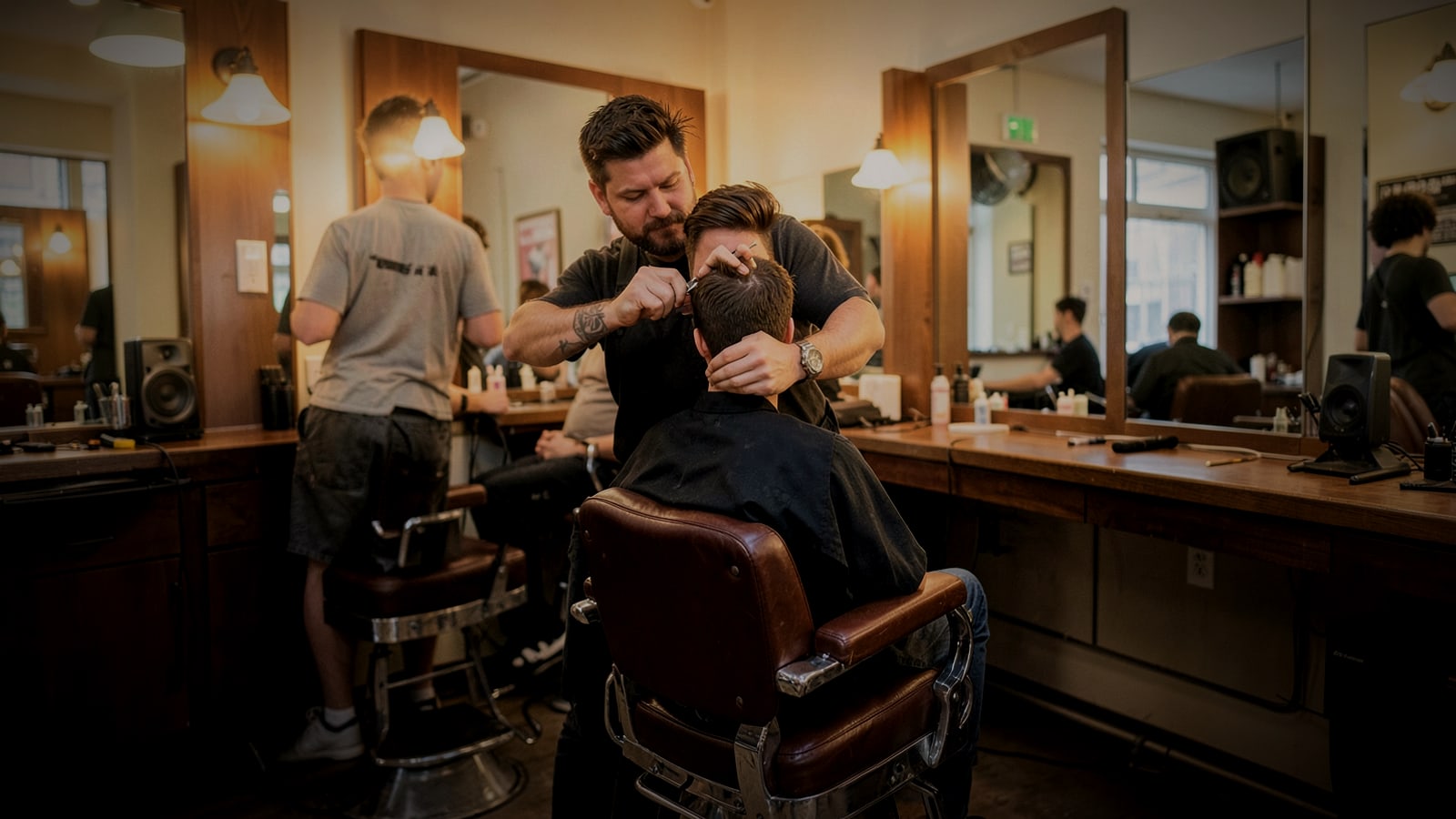
In a barbershop, music is part of the brand and part of the conversation. It sets the vibe for regulars and keeps barbers going through long days. Here is how to choose barbershop music by hour and client, set the volume around clippers and chat, keep lyrics right for kids, and stay licensed.
Walk into a good barbershop and you know what kind of place it is before anyone says hello. The music does a lot of that work. Barbershop music is part of the brand, part of the conversation and part of what keeps barbers going through a ten-hour Saturday. It is also one of the most common places where a personal phone plugged into a speaker creates a licensing problem nobody thought about.
This guide covers music for barbershops of every style: how to build a barber shop playlist that fits your clients, how loud to play it around clippers and conversation, how to handle lyrics when kids are in the chair, and how licensing works when you play background music for a barber shop's clients.
Start with who sits in your chairs
There is no single sound for barbershops. A classic neighborhood shop with regulars in their sixties, a fade specialist with a young crowd and a premium grooming lounge with a whiskey cart should all sound different. Before choosing music, answer three questions.
- Who are your regulars? Age, background and taste matter more than trends. Your soundtrack should feel like it was chosen for them.
- What is the shop's personality? Old-school and relaxed, high-energy and social, or polished and calm.
- Who else comes in? Parents with kids, first-time walk-ins and older clients all hear the same speakers as your regulars.
Write the answer down as three words, for example "warm, confident, classic" or "loud, social, current". Every playlist decision can be checked against those words.
Genres that work in barbershops
Hip-hop and R&B are the backbone of many barbershops, and for good reason: they suit the social, confident feel of a busy shop. Hip hop for barbershop use works best when you think in eras and moods rather than the current chart alone: classic boom bap and soul-sampled tracks for relaxed hours, more current material when the shop is full.
Other styles that work well:
- Soul, funk and classic R&B. Timeless, warm and liked across ages. A safe core for mixed crowds.
- House and deep house. Steady grooves that keep energy up without aggressive lyrics. Good for premium and modern shops. Our house catalog is a useful starting point.
- Upbeat pop. Bright, familiar-feeling energy for busy afternoons. See our upbeat mood for this kind of track.
- Latin, Afrobeats and reggae-influenced grooves. Great if they match your clientele and neighborhood.
- Jazz and blues. Classic shop atmosphere, especially for early mornings and traditional shops.
A barber shop playlist by time of day
- Opening to mid-morning: relaxed and warm. Soul, jazz, classic R&B, mellow grooves. Early clients are often older or heading to work.
- Late morning to lunch: steady mid-tempo. Classic hip-hop, R&B, house at moderate volume.
- Afternoon and after school: kids and teens arrive with parents. Keep the energy up but the lyrics clean.
- Evening and Saturday peak: the busiest, most social hours. Current hip-hop, upbeat pop and house, with the volume up a notch but still below conversation.
- Last hour: keep energy up for the team and the final clients, and avoid a sudden drop that feels like closing time an hour early.
Lyrics and family clients
Explicit lyrics are the most common barbershop music complaint. A track that fits your regulars on a Friday night can be uncomfortable for a parent bringing an eight-year-old for a first haircut.
Practical rules:
- Default to clean versions during school hours and on weekend mornings, when families come in.
- Preview new music before it goes on the shop speakers, not after a client reacts.
- Agree a shop rule with the team. If barbers take turns choosing music, everyone should know the rules on lyrics and volume.
- Keep late-night energy for late hours. If you open late for adults only, that is the time for the harder edge.
Volume: clippers, chat and hearing
A barbershop is a noisy workplace. Clippers, trimmers, hair dryers, running water and several conversations all compete with the music. The temptation is to keep turning it up to stay on top of the noise, and over a long day that gets tiring for everyone.
- Conversation first. Barber and client should be able to talk at a normal level. Consultations and small talk are part of the service.
- Watch the cumulative level. OSHA requires employers to run a hearing conservation program when employee noise exposure reaches 85 dBA as an eight-hour time-weighted average. Loud music on top of tools and chatter for a full shift adds up for your team.
- Turn it up a little for the peak, then back down. A packed Saturday needs more level than a quiet Tuesday morning.
- Keep the bass in check. Deep bass travels through walls and into neighbors, and it can make phone calls at the front desk hard to hear.
Barbershop speakers and setup
You do not need a club system. You need even, clear sound across the shop.
- Two to four small speakers spread through the room sound better than one large speaker at the back turned up high.
- Point speakers toward the waiting area and walkways, not directly at a single chair.
- Use a dedicated device for the shop's music, such as a tablet that stays in the shop, not a barber's personal phone. It avoids gaps when someone takes a call or leaves for lunch.
- Keep volume control in one place, so the level does not change every time a different barber walks past the speaker.
Licensing: the barber's phone problem
In many shops, the music comes from a barber's personal streaming account connected to a Bluetooth speaker. It feels normal, but consumer streaming subscriptions are licensed for personal use, not for playing to customers in a business.
Under U.S. copyright law, performing music "publicly" includes performing it at a place open to the public (17 U.S.C. 101). A barbershop is a place open to the public, so playing music there is a public performance that generally needs a license. The same applies to booth-rental shops: the shop plays music to everyone in the room, so decide who is responsible for the license and document it.
The options are licenses from the performing rights organizations that represent the songs you play, with a music source that allows business use, or a business music service that includes a public performance license for its own catalog. WeavyAudio is the second kind: an original catalog owned by WeavyAudio, with a license to publicly perform it at your registered location set out in section 3 of our terms. It does not cover music from other sources, TVs or videos you post online.
For more on salon and grooming spaces, see our guide to music for hair salons and spas and our page on music for hair salons and barbershops.
Barbershop music checklist
- Describe your shop's sound in three words and check playlists against them.
- Build blocks by time of day, with clean lyrics during family hours.
- Keep conversation level as your volume ceiling, and remember your team's all-day exposure.
- Spread several small speakers through the room.
- Move the music off personal phones onto a dedicated device and a source licensed for business use.
- Agree music rules with every barber, including booth renters.
If you want one licensed catalog for the whole shop, you can see the plans.
FAQ
What music do barbershops usually play?
Hip-hop and R&B are the most common, alongside soul, funk, house, upbeat pop and Latin or Afrobeats grooves, depending on the clientele. The best barbershop music matches the shop's regulars and changes energy through the day.
Can barbers play Spotify in the shop?
Consumer streaming subscriptions are generally licensed for personal use, so playing a personal account to clients in a shop is usually outside those terms. A business music service or proper licensing is the safer route.
How loud should music be in a barbershop?
Loud enough to create atmosphere, but quiet enough that barber and client can talk at a normal level. Raise it slightly at peak times and lower it again when the shop is quiet.
Who is responsible for music licensing in a booth-rental barbershop?
It depends on your arrangements, so do not leave it to chance. The shop plays one soundtrack to everyone in the room, so the simplest approach is for the shop to hold the license for the shared sound system and to agree in writing that renters do not play their own music on it. This is general information, not legal advice.
Barbershop Music: What Else to Know
A barbershop's atmosphere is rooted in its music. For a classic neighborhood shop, jazz and blues classics like Louis Armstrong and Billie Holiday evoke nostalgia; for a modern high-end grooming experience, electronic or indie tracks create an edgy vibe. The goal is to match the mood of your clients – whether it's a relaxing shave-and-a-haircut combo for seniors or a bold fade for the young crowd.
What kind of music do most barbershops play?
While there's no single sound, many classic neighborhood shops rely on jazz and blues legends like Louis Armstrong, Ella Fitzgerald, and Billie Holiday. Modern high-end shops often opt for electronic or indie tracks to create a more contemporary atmosphere.
Can I just stream music from my phone without worrying about licensing?
No – playing background music for clients creates a licensing problem because it's not covered by personal streaming accounts like Spotify. Barbershops need a dedicated license that covers public performance, which is usually handled through a commercial music subscription or a specific barbershop music service.